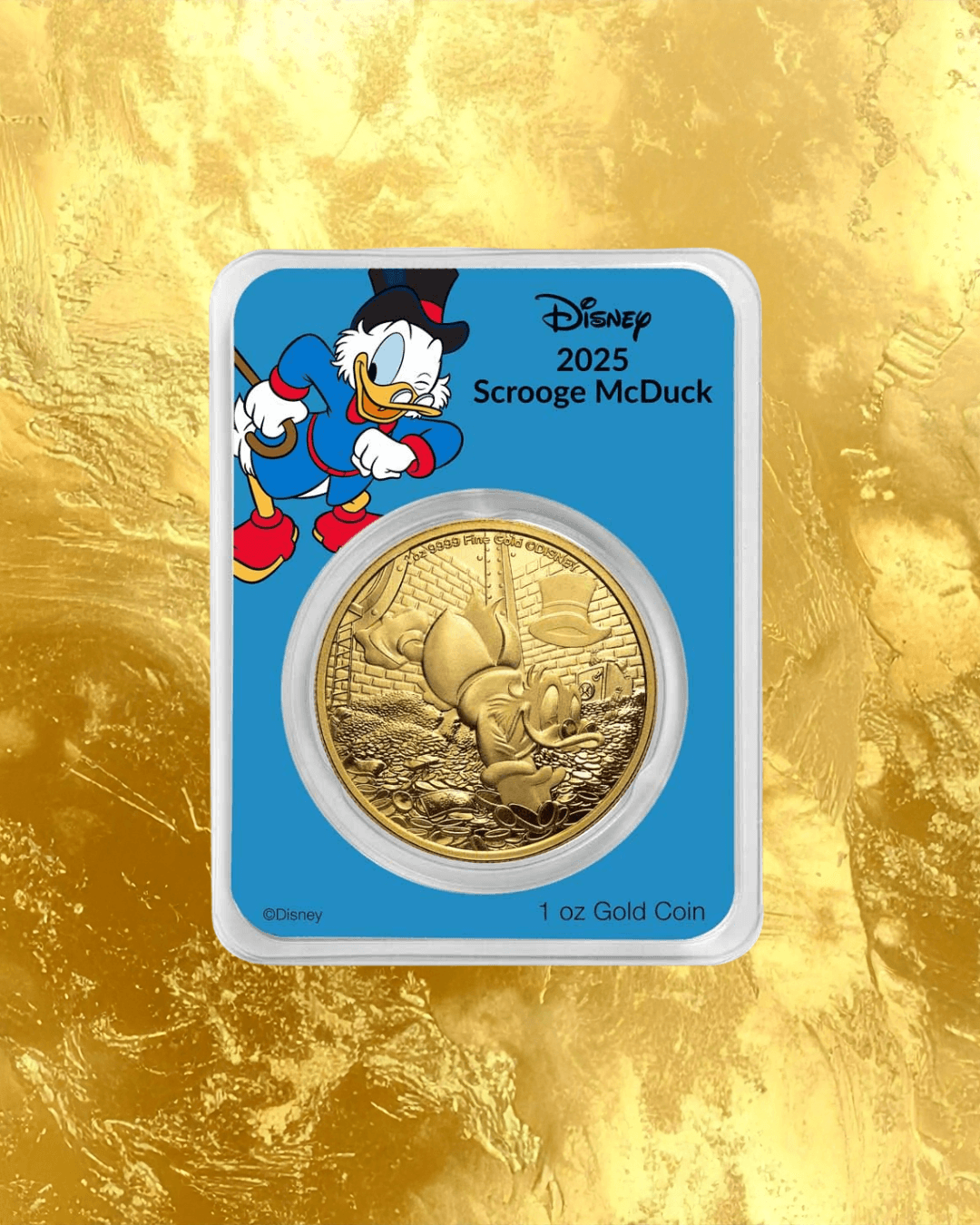
On January 26, gold broke $5,000 an ounce for the first time. Spot prices surged past $5,100 before settling around $5,089. As of this writing, gold is trading around $5,011.
If you collect bullion, you already felt it in your wallet. If you collect numismatic coins, the effects are stranger and more complicated than a simple price chart suggests.
Gold gained 64% in 2025. The biggest annual move since 1979. Silver did even better. It ended 2025 up 147%, hitting an all-time high of $83.97 in late December. Today it's trading around $77.77.
This is the most dramatic precious metals rally in over four decades. And it's reshaping what it means to collect coins in 2026.
The Bullion Side: Everything Costs More
Start with the obvious. A one-ounce American Gold Eagle now costs north of $5,000. The US Mint's 2026 Proof Gold Eagle four-coin set lists at $11,410. Buying every gold coin the Mint plans to release this year would run you roughly $68,380.
The 2026 Proof Gold Eagles went on sale March 5 and posted their best debut since 2023. Nearly 28,000 coins sold in four days. Demand is real. So is the barrier to entry.
Silver isn't cheap either. The 2026-W Proof American Eagle Silver Dollar debuted at $173. Last year it was $95. That's an 82% increase. The Mint had no choice. Silver closed at $93.84 per ounce in mid-January. A year before that, it was $30.55.
When the metal inside a coin costs three times what it did 12 months ago, everything downstream moves.
The Numismatic Side: Premiums Are Disappearing
Here's where it gets interesting for collectors.
Common-date US gold coins have historically traded at a premium above their melt value. You paid extra for the history, the design, the collectibility. A $20 Saint-Gaudens Double Eagle in average condition might have carried a 10-15% premium over spot.
That premium has all but vanished.
At $5,000 gold, a Double Eagle contains roughly $4,838 worth of metal. The numismatic premium that once separated a collectible coin from a bullion round has compressed to near zero for common dates. Some $5, $10, and $20 gold coins are trading at 1-3% over melt. That's bullion pricing with a Liberty head on it.
Dealers are feeling the squeeze. When your inventory's melt value rises faster than the collector premium you can charge, margins evaporate. Some shops are sitting on coins they can't profitably sell.
The flip side. If you're a buyer, common-date pre-1933 gold has never been cheaper relative to its gold content. You're essentially buying bullion with 100+ years of history attached for almost no extra cost.
The Rare Date Exception
Premium compression hits common coins hardest. Rare dates and high-grade pieces are a different story.
Key-date Double Eagles, early gold denominations, and coins graded MS-65 or above still command significant premiums. Rarity doesn't compress. A 1927-D Saint-Gaudens is still a million-dollar coin regardless of where spot gold trades.
The lesson is simple. When gold runs, the market splits. Common coins trade like metal. Rare coins trade like art. The gap between them is wider than it's been in years.
Heritage Just Ran a Coins Auction. Nobody Panicked.
Heritage Auctions held a Carson City Coinage auction on March 16. It realized $144,006 from 448 bidders. The same day, Heritage ran a Contemporary Classics Watches Showcase that pulled in $454,119 from 424 bidders.
Those aren't blowout numbers. But they're steady. Collectors are still buying coins at auction even with gold above $5,000. The action is shifting toward rarer pieces where the numismatic story matters more than the metal content.
The broader Heritage machine keeps printing. They closed 2025 above $2.15 billion in total sales. Fifth consecutive annual record. Coins are a piece of that, and they're not slowing down.
The Semiquincentennial Factor
2026 is the 250th anniversary of the United States. The Mint is going all in.
New Semiquincentennial coins and medals are rolling out across the year. Privy-marked Gold Eagles. Special "Best of the Mint" sets. Redesigned circulating quarters with new Liberty artwork.
For collectors, this is the most interesting US Mint product schedule in decades. For your wallet, it's brutal. Every release is priced against current spot. A commemorative gold coin that might have cost $2,500 two years ago now starts above $5,000.
The Mint's 2026 lineup is worth collecting. Just know that the entry price for gold pieces has never been higher.
Goldman Says $5,400 by December
Goldman Sachs raised its year-end 2026 gold forecast to $5,400 per ounce in January. Deutsche Bank and Societe Generale are even more aggressive, projecting $6,000.
The drivers haven't changed. Central banks are buying 60 tons a month. Western ETF holdings have added 500 tons since early 2025. Private investors are diversifying into hard assets. Geopolitical uncertainty is the new normal.
If the forecasts are right, the trends hitting coin collectors now will intensify. Higher entry costs. More premium compression on common coins. Greater separation between bullion-grade and truly rare numismatic pieces.
If they're wrong and gold pulls back, common-date numismatic coins could be the first to benefit as premiums re-expand.
What Collectors Should Actually Do
Forget the investment thesis for a minute. Here's what matters if you collect coins.
If you stack bullion. You're sitting on a pile of money. But selling into strength means buying back at strength. The spread between buy and sell prices widens when volatility is high. If you're not selling, your cost basis for new purchases just tripled.
If you collect numismatics. Common-date gold coins are at their cheapest relative to metal content in years. That's a buying opportunity if you care about the coins and not the spot price. When gold eventually stabilizes, those premiums will expand again.
If you're new. Silver is the on-ramp. A Proof Silver Eagle at $173 is expensive by historical standards but still accessible. The 2026 Semiquincentennial designs give you something genuinely special to start with. Graded Morgan and Peace dollars remain approachable for under $100 in circulated grades.
If you collect rare dates. The rally doesn't change much for you. A 1913 Liberty Nickel doesn't care about spot gold. Your coins trade on rarity and condition, not metal content. Keep doing what you're doing.
The Bigger Picture
This is nerdbeak's first deep dive into coins and bullion. It won't be the last.
Gold at $5,000 is not a blip. The structural forces driving this rally. Central bank accumulation, currency devaluation fears, geopolitical instability. Those don't resolve in a quarter.
For coin collectors, that means adapting. The hobby looks different when the metal inside your collection is worth more than most people's car. It means thinking harder about what you buy, why you buy it, and whether the premium you're paying is for the metal or the history.
The best coin collections have always been built on the history. That hasn't changed. The price of admission just got a lot steeper.