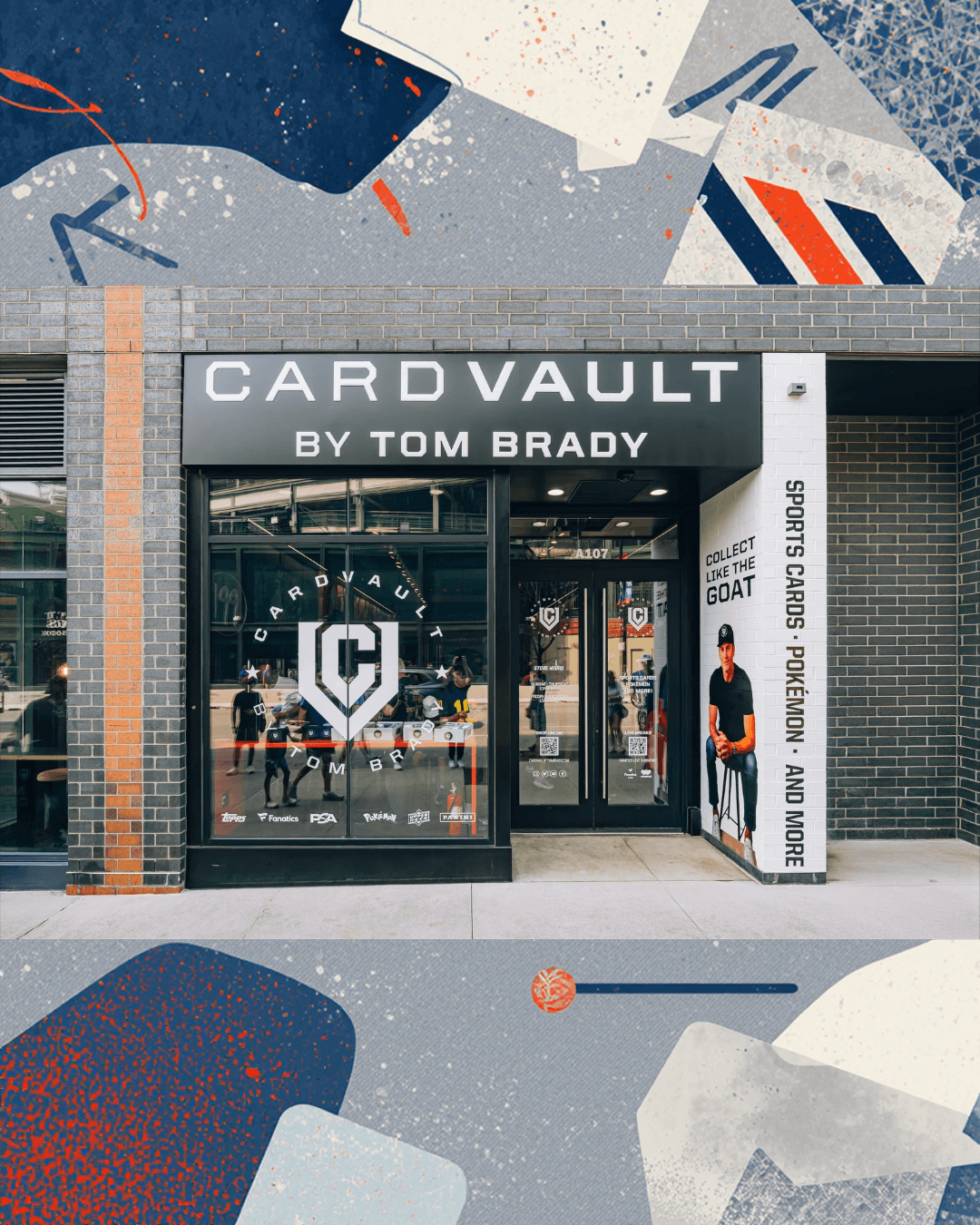
The sports card market will move $3.54 billion this year. Seven cards have already sold for over $1 million before spring. An Aaron Judge Superfractor went for $5.2 million. A Caitlin Clark 1/1 hit $660,000. And somewhere in a Target aisle right now, a 12-year-old is ripping a $25 blaster box hoping for a pull worth $5.
Both of those things are the hobby in 2026. This guide is for people entering it for the first time and people coming back after years away. No jargon walls. No hype. Just what you actually need to know.
The State of the Sports Card Market in 2026
The market is bigger than it was during the 2021 pandemic boom. It is also fundamentally different.
In 2021, everything went up. Stimulus checks, boredom, and Reddit speculation turned base rookies into lottery tickets. That market is dead. What replaced it is a K-shaped split. The top end is on a record pace. 233 transactions above $100K through early March. A trajectory toward 41,000 sales over $10K by December. Auction houses like Heritage, Goldin, and Fanatics Collect are processing more six-figure sales than ever.
The bottom end is drowning. Fanatics/Topps pushed 429 million cards into the market in a single NBA flagship release. Each base card exists in roughly 1.26 million copies. Topps Update production surged 39.8% to 228 million cards in 2025. When a base card has over a million copies, it is not a collectible. It is packaging.
What does this mean for a beginner? Two things. First, there has never been a cheaper time to start collecting because base cards and low-end product are everywhere. Second, if you are entering the hobby expecting to flip cards for profit, the math is brutally stacked against you on anything that is not scarce.
Pick Your Sport (And Your Lane)
Not all sports cards are created equal. The sport you collect shapes everything: what products exist, how liquid the market is, and what your money buys.
Baseball. The deepest market. The longest history. Topps has held the MLB license since 1952 and isn't going anywhere. The prospect market runs hot. Players who haven't played an MLB game yet have cards selling for hundreds. Shohei Ohtani moved $57.96 million in eBay sales in 2025. If you want the most product options and the deepest pool of buyers when you sell, baseball is the default.
Basketball. The highest ceilings. Michael Jordan cards moved $70.53 million on eBay in 2025. LeBron did $30.55 million. Cooper Flagg is the current rookie to watch, averaging 20.4 points per game for the Mavericks with raw autos already at $1,100. Basketball cards tend to be the most volatile. Big games spike prices. Bad stretches crater them.
Football. In transition. Panini's NFL license expires March 31, 2026. Fanatics takes over April 1. The first Topps-branded NFL product is expected in September. That means a six-month gap with no new licensed football cards. Sealed 2025 Panini products are already up 20-40% because collectors know no more are coming. New entrants should understand the landscape is shifting under their feet.
Soccer. The 2026 World Cup is in the US, Canada, and Mexico. Lamine Yamal's SuperFractor auto sold for $396,500. His cards are up 150-200%. Soccer cards have the largest global collector base but a less developed US market compared to the Big Three American sports.
Hockey. The smallest of the major four. Upper Deck holds the exclusive license. Young Guns rookies are the format that matters. Prices are lower across the board, which makes it the most affordable entry point for a sport-specific collection.
WNBA. The fastest-growing segment. Caitlin Clark moved $21.73 million in eBay sales in 2025. Her Flawless Platinum Rookie 1/1 sold for $660,000, a women's sports card record. Angel Reese is the second name to know. Product options are still limited compared to men's sports, but every major manufacturer is expanding.
Pick one sport to start. Learn its product lines, its grading premiums, and its player market. Then expand if you want. Trying to collect everything at once is the fastest way to collect nothing well.
Collecting vs. Investing: Know What You Are Doing
Be honest with yourself about why you are here.
If you are collecting because you love the players, the art, the chase, and the history, you will enjoy this hobby for decades. If you are investing to make money, you need to understand that most people lose.
The top of the market is real. Million-dollar sales happen. But those are 1/1 cards, Superfractors, and vintage hall-of-fame pieces. The odds of pulling one from a retail box are functionally zero. The odds of buying one cheap and watching it appreciate require either deep knowledge or luck that you should not count on.
Here is the uncomfortable math. A hobby box costs $100 or more. The expected value of what you pull is almost always less than what you paid. Manufacturers set the price above expected return. That is how they make money. You are paying a premium for the experience of opening packs and the small chance of hitting something big.
Collect what you like. Set a budget. Stick to it. If a card goes up in value, that is a bonus. If it does not, you still have something you wanted. That mindset will save you more money than any price guide.
Understanding Card Types and Products
Every sports card product is built from the same building blocks. Learn these and you can decode any release.
Base cards. The most common cards in any set. Printed in massive quantities. Worth pennies to a few dollars unless the player becomes a generational talent. They are the foundation of set building, not investing.
Rookie cards. A player's first officially licensed card, typically marked with an "RC" logo. Rookie cards carry the highest long-term value potential for any player. The key word is "potential." Most rookies never become stars. Their cards end up in dollar boxes at card shows.
Parallels. Colored variations of base cards. Numbered to a print run. A base card might have 1.26 million copies. A /299 Blue parallel has 299. A /25 Gold has 25. A 1/1 Superfractor has one. Lower print runs mean higher prices. Numbering is printed on the card.
Autographs. Cards signed by the player, either on-card (sticker-less, more valuable) or with a sticker applied to the card surface. On-card autos command a significant premium.
Relics/Memorabilia. Cards with a piece of game-worn jersey, bat, or equipment embedded in them. Patch cards with multi-color swatches are worth more than plain single-color jersey pieces. The term "player worn" means the item was worn at a photo shoot, not in a game. That distinction matters.
Inserts. Special cards inserted into packs at a set ratio. They are not parallels and not part of the base set. Think of them as bonus cards with their own design and theme.
Numbered cards. Any card with a print run stamped on it (e.g., /99, /50, /10). The lower the number, the scarcer the card. Cards numbered to 1 (1/1) are unique.
Hobby boxes vs. retail. Hobby boxes cost $100 and up. They are sold through local card shops and online retailers. They guarantee a certain number of autographs, relics, or numbered parallels per box. Retail blaster boxes cost $20-30 and are sold at Target, Walmart, and similar stores. They have no guarantees. The pull rates are significantly worse. Retail is for fun. Hobby is for collectors who want guaranteed hits.
What Does a Beginner Budget Actually Buy?
Real numbers. No vague advice.
$25/month. One retail blaster box. Or 5-10 singles of players you actually want from eBay. The singles route gives you exactly the cards you want instead of gambling on pack pulls. At this budget, buying singles is almost always smarter than ripping packs.
$50/month. A hobby pack or two from your local card shop. Or 10-20 targeted singles. You can start building a focused player collection at this level. Pick one or two guys. Buy their base rookies raw. Stack them.
$100/month. One hobby box every month or two, plus singles to fill gaps. This is where you can meaningfully participate in new releases and still buy specific cards on the secondary market. A solid starting point for someone who wants to rip packs and collect strategically.
$200/month. Multiple hobby boxes per year. Room to chase numbered parallels and low-end autos on the secondary market. Enough to justify a PSA submission every couple of months. At this budget, you should have a clear strategy. Player collection, set building, or targeted flipping. Spreading $200 across random purchases adds up to a pile of nothing.
At every budget level, the same rule applies. Singles over packs if you want specific cards. Packs over singles if you want the experience of opening.
Where to Buy Sports Cards
Your local card shop (LCS). The best place to start. Walk in. Tell them you are new. Most shop owners will spend 20 minutes teaching you what to buy and what to avoid. You will pay a slight premium over online prices, but you get to see the product, handle the cards, and learn from someone who does this every day. Find yours at sportscarddirectory.com.
eBay. The largest secondary market for singles and sealed product. Use the "Sold Items" filter religiously. It shows what cards actually sell for, not what sellers hope to get. The gap between listed price and sold price on sports cards is enormous. eBay charges sellers about 13% in fees, which gets baked into prices.
COMC (Check Out My Cards). A consignment platform with millions of cards. Prices tend to be competitive. You can build a cart over time and combine shipping. Good for picking up base rookies and mid-range singles without overpaying.
Card shows. The best deals in the hobby happen face-to-face. Sellers at shows do not pay platform fees. That savings gets passed to you. Bring cash. Know your prices from eBay sold comps beforehand. Negotiate politely. Most vendors will come down 10-20% from sticker, especially later in the day.
Fanatics/Topps direct. For new releases, you can buy directly from the manufacturer. Retail prices. No markup. Product sells out fast.
What to avoid as a beginner. Instagram sellers with no reputation. Facebook Marketplace listings that seem too cheap. Any "investment group" that charges a membership fee to tell you what cards to buy. If someone guarantees returns on sports cards, they are lying to you.
Card Breaks: What They Are and What You Need to Know
A card break is when someone opens sealed product on a live stream and distributes the cards to participants who bought spots. You typically buy a "team slot." If anything good gets pulled from your team, it ships to you. If not, you get whatever base cards hit.
Types of breaks. Pick Your Team (PYT) is the most common. Random Team assigns teams by lottery after you buy a spot. Hit Draft lets participants draft cards as they are pulled. Personal breaks open boxes entirely for one buyer.
Platforms. Whatnot is the largest, followed by Fanatics Live, Loupe, and individual streamers on YouTube and Twitch.
The appeal. Breaks let you access expensive hobby boxes at a fraction of the full box price. A $500 box split across 30 team slots might cost $15-25 per spot. You get exposure to high-end product without the full buy-in.
The risk. Most spots return less than what you paid. You might spend $20 for a team slot and receive two base cards worth $0.50 combined. That is the most common outcome. The math favors the breaker, not the buyer. Breakers profit on the spread between what they charge for all spots combined and what the box costs them.
The legal question. Thirty users have filed arbitration demands against Whatnot alleging the platform operates as an "unregulated online casino." The filings cite California Penal Code 319.3, which specifically defines a "sports trading card grab bag" as a lottery. Three elements are present in breaks: chance, prize, and consideration. Upper Deck's president has publicly called breaks "100 percent pure gambling the way it's being done right now."
Breaks are fun. Breaks can also become compulsive fast. The live-stream format, the chat hype, the dopamine of a potential hit. It is designed to keep you watching and buying spots. Set a hard dollar limit before you enter any break. Stick to it.
How to Protect Your Cards
Protecting your cards costs almost nothing. Neglecting it costs everything.
Penny sleeves. A soft, thin plastic sleeve that goes on first. Costs about $0.02 per sleeve. Every card you care about should be in one. No exceptions.
Toploaders. A rigid plastic holder that goes over the penny sleeve. The combo costs roughly $0.12 per card. This is the minimum acceptable protection for any card worth more than a dollar.
One-touch magnetic cases. Snap-shut holders with a magnetic seal. Better display presentation than toploaders. Cost $3-8 each depending on size. Use these for your best cards or cards you want to display.
Card savers. Semi-rigid holders required by PSA and most grading companies for submissions. If you plan to grade a card, put it in a card saver, not a toploader. Grading companies will not accept toploaders.
Storage. Keep cards in a cool, dry place. Avoid attics, basements, garages, and anywhere with temperature swings or humidity. Heat warps cards. Moisture causes mold. Direct sunlight fades colors. A closet shelf in your living area is better than a climate-uncontrolled garage.
The one-touch rule for valuable cards. Anything worth $50 or more should be in a one-touch or card saver immediately. Do not leave valuable cards sitting in a stack on your desk. It takes one accident to turn a $200 card into a $40 card.
Grading 101: When It Is Worth It (And When It Is Not)
Grading means sending a card to a professional authentication company that evaluates its condition on a 1-10 scale, seals it in a tamper-evident case (a "slab"), and assigns a grade. A higher grade means a higher price. A PSA 10 can sell for 5-20x the same card in a PSA 9.
The Big Four
PSA (Professional Sports Authenticator). The industry standard. 67% market share. Grades 90,000 cards per day. The most recognized label in the hobby. A PSA 10 commands the highest resale premium on almost every card. Cheapest tier: $24.99/card through Value Bulk, but requires a Collectors Club membership ($149-199/year) and a 20-card minimum. Standard service runs about $50/card.
SGC (Sportscard Guaranty Company). The toughest grading standards and fastest turnaround times. Bulk grading runs $15-18/card. SGC tuxedo slabs have a loyal following, especially among vintage collectors. The per-card cost makes SGC the best value for beginners testing the grading waters.
CGC (Certified Guaranty Company). The only fully independent major grader. Not owned by a card marketplace or auction house. CGC grew 95% recently and offers competitive pricing. Their slabs are the most durable. The trade-off: CGC cards still sell at a slight discount to equivalent PSA grades, though the gap is closing.
BGS (Beckett Grading Services). Unique for sub-grades. Every card gets scored on centering, corners, edges, and surface. A BGS Black Label 10 (all four sub-grades at 10) can sell for more than a PSA 10 on high-end cards. Market share has been declining, and Collectors (PSA's parent company) announced a deal to acquire Beckett in late 2025.
When NOT to Grade
This matters more than knowing when to grade.
Do not grade modern base cards. The grading fee exceeds the graded value on almost all of them.
Do not grade cards in poor condition. A PSA 7 on a modern card adds zero value. It actually hurts, because now the card is locked in a slab advertising that it is not a 9 or 10.
Do not grade cards worth less than $50 raw unless you are extremely confident in a 10. The $100 rule: if the graded value will not meaningfully exceed $100, the math rarely works after fees and shipping.
Do grade vintage cards in any condition. Authentication alone adds value on pre-2000 cards. Even a PSA 5 on a 1960s card is worth significantly more than the same card raw because buyers want proof it is genuine.
Do grade modern cards worth $75 or more raw if the condition looks like a 9 or 10. That is where the grading multiplier actually covers the cost and then some.
How to Sell Sports Cards
Eventually, you will want to sell. Here is where and how.
eBay. Still the default. Largest buyer pool. Use auction format for cards worth $50 or more to let the market set the price. Use Buy It Now for cards where you know the comp and want a specific number. Fees run about 13% after final value fees and payment processing. Ship with tracking. Always.
COMC. Send your cards in bulk. COMC photographs, lists, and stores them. When they sell, you get paid minus their fees. Good for moving volume without managing individual listings. The trade-off is slow payment cycles and limited control over pricing.
Goldin Auctions. For high-end cards. Goldin is where six- and seven-figure sales happen. They will not accept your stack of base rookies. Minimum consignment values apply. If you have a graded card worth $500 or more, Goldin's buyer base will likely get you a better price than eBay.
Your local card shop. Fast cash, but expect 50-70% of market value. Shops need margin. If you need money today and do not want to wait for an auction to close, this is the fastest route.
Facebook groups. Active buy/sell/trade groups exist for every sport and product line. No platform fees. No buyer protection either. Only sell to members with established reputation. Use PayPal Goods & Services for protection. Venmo and Zelle offer no recourse if you get stiffed.
Fee comparison on a $100 card sale. eBay: $100 minus ~13% = $87 to you. COMC: varies, roughly 10-15% depending on tier. Goldin: 0-20% seller premium depending on consignment value. Facebook: $0 in fees if the buyer is honest. Local shop: $50-70 cash in hand.
The Panini-to-Fanatics Transition
This is the biggest structural change in sports cards in a decade. You need to understand it even as a beginner.
Panini held exclusive NFL and NBA card licenses for years. Those licenses expire March 31, 2026 for the NFL (already happened or happening any day now) and will transfer to Fanatics/Topps. Fanatics now controls 100% of licensed NFL, NBA, and MLB card production.
What this means for you. Product names you have heard of like Prizm, Select, and National Treasures are Panini brands. They are gone from football after March 31. Fanatics/Topps will create new product lines. The first Topps-branded NFL product is expected in September 2026.
Sealed 2025 Panini NFL products are already up 20-40% because collectors know they are the final run. If you see sealed Panini NFL at retail price, it is probably already gone. Secondary market premiums are baked in.
For a beginner, the transition means confusion in the short term and clarity in the long term. By 2027, Fanatics/Topps will have established its football product lines, and the hobby will have a new normal. Right now, you are entering during the messy middle. That is fine. Just know that the product names and release calendars are in flux.
How to Not Get Scammed
This is the most important section in this guide.
Shill Bidding
Fake bids placed to drive up prices. It happens on eBay, in Facebook groups, and on live selling platforms. Signs to watch: bidders with zero or low feedback repeatedly bidding on the same seller's items. Prices that jump in small, consistent increments as if someone is nursing the bid up. Auctions that end and get relisted at a lower price (the shill won but the seller relisted because there was no real buyer).
On live platforms, watch for "house accounts." Accounts tied to the seller or their friends that bid to create the appearance of demand. If the same usernames win auctions repeatedly from the same seller and those accounts have no other activity, walk away.
Repacks and Mystery Packs
Someone buys a case of cards. Opens every pack. Removes anything valuable. Reseals the remaining bulk into new packaging and sells it as a "mystery pack" or "repack" with claims like "$500 value guaranteed." The valuable cards were already removed. What you are buying is searched bulk in a shiny wrapper.
The rule is simple. If it is not factory sealed in the manufacturer's original packaging, assume the good cards are already gone.
Fake Cards and Fake Slabs
Counterfeit cards exist at every level. Fake base rookies, fake patches, fake autographs. The higher the value, the more sophisticated the fakes.
Fake slabs are the scariest version. Someone prints a fake PSA or BGS label, inserts a real (or fake) card, and seals it in a case that looks official. Before buying any graded card worth real money, verify the certification number on the grading company's website. PSA has a free cert verification tool at psacard.com/cert. If the cert number does not match the card in the listing, it is fake. If there is no cert number, do not buy it.
Trimmed Cards
Trimming means someone physically altered a card's edges to improve centering or remove damage. A card that looks perfectly centered might have had a millimeter shaved off one side. Grading companies catch most trimming, but not all. It is most common on vintage cards where the difference between a PSA 6 and a PSA 8 is thousands of dollars.
If a raw vintage card looks too perfectly centered compared to the typical print quality of that era, be cautious.
The Universal Rule
If a deal looks too good to be true, it is. A PSA 10 card selling for half of recent comps on a Facebook post with blurry photos is not a deal. It is a scam. Check sold comps. Verify cert numbers. Buy from established sellers. Use payment methods with buyer protection.
Rookies to Watch in 2026
These are the names driving the current market. This is not investment advice. This is what collectors are actually buying.
Cooper Flagg. The number one overall pick. Averaging 20.4 points per game for the Dallas Mavericks. Raw autos are trading around $1,100. His Padparadscha 1/1 sold for $366,000 at the Goldin 100. Flagg is the most-collected rookie in basketball right now and it is not close.
Roman Anthony. Red Sox outfielder hitting .292. His cards are sitting around $45 raw. If the bat keeps performing, those prices have room to move. If it does not, $45 cards become $15 cards. That is how prospect collecting works.
Lamine Yamal. The 17-year-old Barcelona star heading into the 2026 World Cup. His SuperFractor auto sold for $396,500. Cards are up 150-200%. A World Cup breakout from Yamal on US soil could push prices to levels soccer cards have never seen.
Caitlin Clark. $21.73 million in eBay sales in 2025. The Flawless Platinum Rookie 1/1 at $660,000 set the women's sports record. The WNBA's growth is not slowing down, and Clark is the market's anchor.
2026 NFL Draft class. Names are not finalized at the time of writing. Watch for the first Fanatics/Topps NFL rookie cards dropping in September 2026. Those will be the first licensed football rookies from the new manufacturer. History says first-year products from a new licensee generate collector interest purely for the novelty.
10 Mistakes Every Beginner Makes
1. Buying retail and expecting profit. Blaster boxes are for fun. The expected value is almost always below the purchase price. If you need to profit, buy singles.
2. Not setting a monthly budget. Cards are an open-ended expense. Without a number, spending creeps up until you notice. Set it. Track it.
3. Grading everything. That stack of 30 base rookies does not need to go to PSA. Five strong candidates beat thirty mediocre ones. Every time.
4. Ignoring condition before buying. Centering, corners, edges, surface. Check all four before paying for a raw card. A card that looks great in a listing photo can look terrible under a loupe.
5. Chasing hype players after they spike. If a player just had a huge game and you are buying his cards the next morning, you are buying at the top. The time to buy is before the spike or after it cools off.
6. Not checking sold comps. The listed price on eBay is fiction. The sold price is reality. Always check what a card actually sold for in the last 30-90 days before paying.
7. Buying from unknown sellers without protection. PayPal Goods & Services. eBay buyer protection. Credit card chargebacks. Use payment methods that let you dispute. Never send Friends & Family, Venmo, or Zelle to someone you do not know.
8. Treating every pull as a keeper. If you rip a box and pull a decent auto of a player you do not collect, sell it while the product is new and demand is high. Sitting on cards "just in case" is how you end up with a closet full of depreciating inventory.
9. Collecting too many players. A focused collection of 15-20 cards of one player you love will be more valuable and more satisfying than 200 random singles of 50 different guys.
10. Comparing yourself to big accounts on social media. The person posting $10,000 pulls on Instagram is not showing you the 200 boxes they ripped to get there. Survivorship bias is real. Collect at your pace and your budget.
Essential Tools and Resources
eBay Sold Listings. Your most important tool. Filter any search by "Sold Items" to see real transaction prices. Free.
130point.com. Tracks eBay sold data with better search and filtering than eBay itself. Free.
CollX app. Scan your cards with your phone camera. The app identifies the card and gives you an estimated market value. Not perfect, but good for quick inventory checks. Free tier available.
Sports Card Investor (SCI). Market data and price tracking for sports cards. Paid subscription but useful for watching price trends over time.
PSA Cert Verification (psacard.com/cert). Free. Enter any PSA certification number and see the card details, grade, and photo. Use this before buying any PSA-graded card.
Reddit. r/sportscards and r/baseballcards are active communities. Good for questions, identification help, and seeing what other collectors are doing. Lurk for a week before posting. Read the sidebar rules.
Card shows and The National. The National Sports Collectors Convention is the biggest event in the hobby. July 29 through August 2, 2026, in Rosemont, Illinois. If you can get there, go. Nothing replaces handling cards in person, meeting dealers, and seeing the scale of the hobby up close.
FAQ
How much money do I need to start collecting sports cards?
You can start with $10. A few singles from eBay or a stack of base cards from a dollar box at your local card shop. There is no minimum buy-in. A $25/month budget is enough to build a meaningful collection over time if you focus on singles of players you like rather than ripping packs.
Are sports cards a good investment?
For most people, no. The top 1% of cards appreciate. The other 99% hold flat or decline. Treat card collecting as a hobby that sometimes returns money, not as a financial strategy. People who profit consistently have deep market knowledge, years of experience, and significant capital. They are not buying blasters at Walmart.
What is the best sports card to buy right now?
There is no single answer. Buy cards of players you watch and enjoy. If you need a starting point, base Prizm or Topps Chrome rookies of current stars in clean condition are liquid and easy to resell. Avoid chasing whatever is trending on social media today. By the time you see the hype, the price has already moved.
How do I know if a sports card is real?
Check the card stock weight. Real cards have a specific feel that fakes rarely replicate. Compare the font, color saturation, and holographic elements to verified examples. For graded cards, always verify the certification number on the grading company's website. When in doubt, buy from established sellers with strong feedback scores.
Should I buy graded or raw cards?
If you want certainty about condition and authenticity, buy graded. You pay a premium, but you know exactly what you are getting. If you want to save money and you trust your eye for condition, buy raw and consider grading the card yourself if it looks like a 9 or 10 candidate. Buying raw cards that look like 10s and getting them graded is one of the few ways to consistently add value in this hobby.
Where is the best place to sell sports cards?
eBay for most cards. Goldin for high-end graded cards worth $500 or more. Your local card shop for fast cash at a discount. Facebook groups for fee-free sales if you can vet the buyer. Each channel has trade-offs between speed, price, and safety.
What are the most valuable sports cards?
The 1952 Topps Mickey Mantle, the T206 Honus Wagner, and the 2003 LeBron James Topps Chrome Superfractor are the three most iconic. In 2026, the most expensive modern sale is the Aaron Judge Bowman Chrome Superfractor at $5.2 million. Vintage tends to hold value better than modern because the supply is permanently fixed.
The hobby is bigger, faster, and more accessible than it has ever been. It is also more overproduced, more hyped, and more full of people who want to sell you something. Start slow. Buy what you like. Learn the market before you try to beat it. The collectors who last decades in this hobby are not the ones who made the biggest flip. They are the ones who never stopped enjoying the cards.