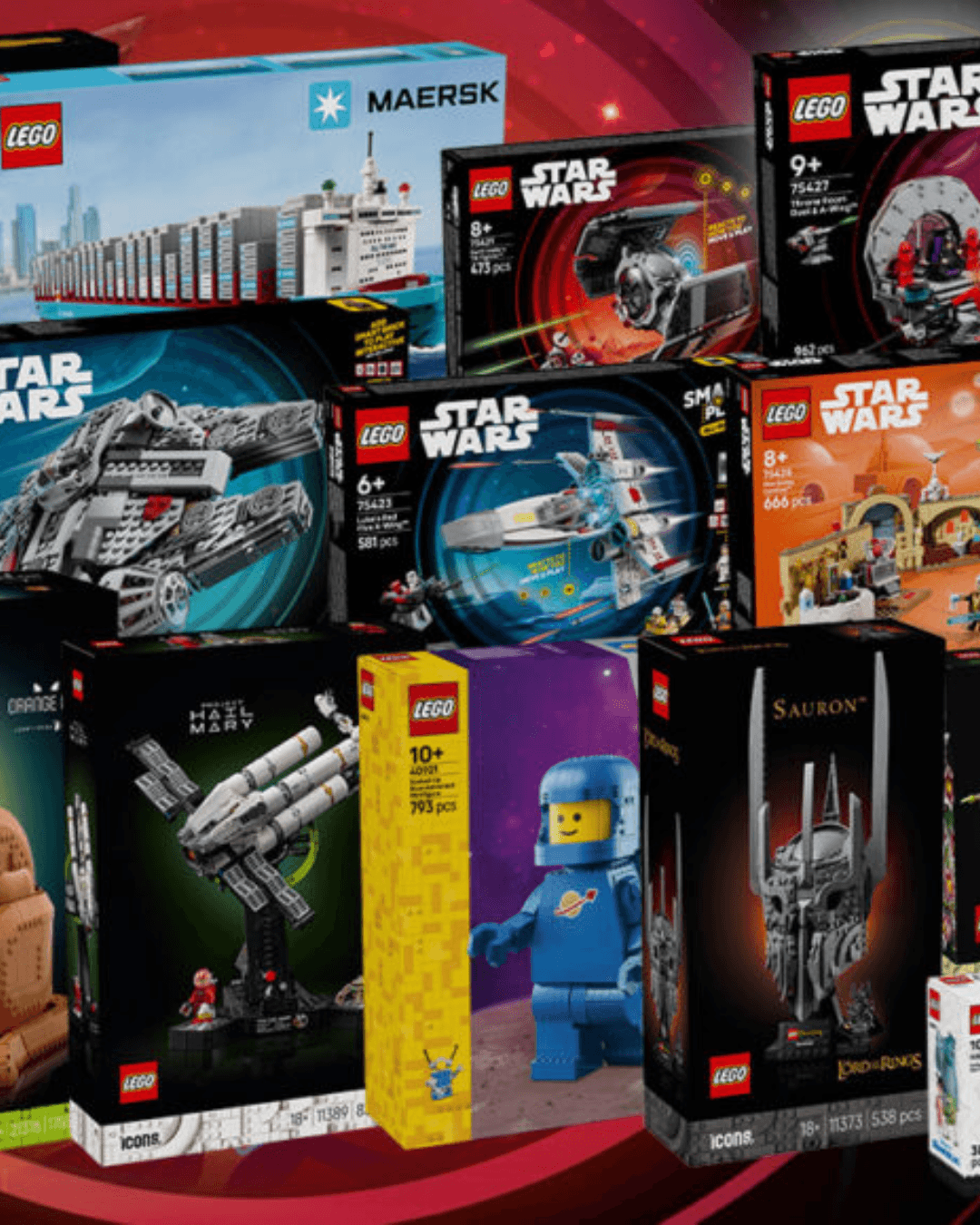
A LEGO brick that hears you. Feels motion. Detects light. Talks back. That's Smart Brick. It launched March 1 with eight Star Wars sets, and it represents the single biggest product innovation LEGO has ever attempted.
The tech inside is absurd for something the size of a stud. Accelerometers. A light sensor. A sound sensor. A miniature speaker with an onboard synthesizer. Wireless charging. Over 20 patented world-firsts crammed into one component.
LEGO unveiled the technology at CES 2026 in January. Now it's real. And it's in stores.
The $69.99 Entry Point
Three launch sets include the Smart Brick and charger right in the box. No separate purchase needed.
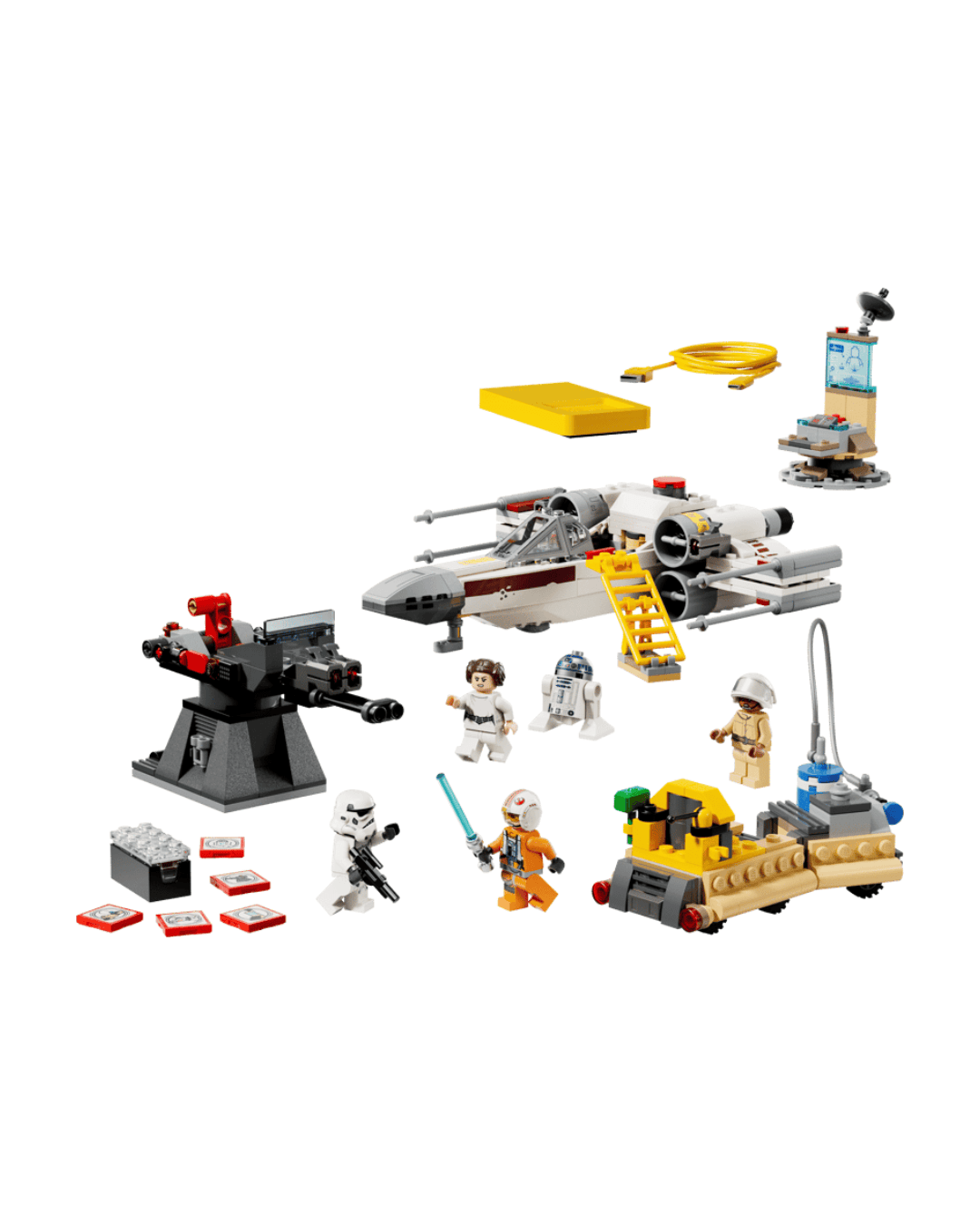
75421 SMART Play: Darth Vader's TIE Fighter at $69.99 is the cheapest way in. 75423 SMART Play: Luke's Red Five X-wing runs $99.99. And 75427 SMART Play: Throne Room Duel & A-Wing tops out at $159.99.
Five additional Star Wars sets are Smart Play compatible but require a separate Smart Brick. Eight sets total at launch.
How It Actually Works
Place a Smart Minifigure on the brick and things start happening. Sounds. Light effects. Character-specific interactions triggered by the minifigure itself. Tilt the build and the accelerometer picks it up. Make a noise and the sound sensor responds.
It's not an app. It's not Bluetooth. The interaction happens in the brick. No phone required.
That's a deliberate choice. LEGO has done app-connected sets before. LEGO Hidden Side. LEGO VIDIYO. Both discontinued. Both failed in part because parents didn't want another screen in the equation. Smart Play keeps the experience physical.
Six Countries. That's It.
US, UK, France, Germany, Poland, and Australia. Those are the only markets at launch. Everyone else waits.
That's unusual for LEGO. Global simultaneous launches are the norm. A six-country rollout signals either supply constraints on the Smart Brick components or a deliberate test market strategy. Probably both. When you've packed 20+ patents into a chip that small, manufacturing at global LEGO scale takes time.
The Price-Per-Piece Problem
Early reviews are mixed on value. The concern is straightforward. You're paying for the tech, which means you're getting fewer bricks per dollar compared to traditional sets at the same price point.
A $69.99 Star Wars set without a Smart Brick would typically have more pieces, more minifigures, or both. Collectors and AFOLs who care about piece count and display complexity are running the math and finding the ratios thin.
LEGO's counter-argument is that you're not just buying bricks. You're buying a platform. The Smart Brick works across all compatible sets. Buy one $69.99 TIE Fighter and the brick moves to any future Smart Play set.
Fair point. But that only works if LEGO keeps making Smart Play sets. And LEGO has killed platforms before.
The Collector Angle
Here's what matters for the long term.
If Smart Play becomes LEGO's next major platform, these March 2026 sets are the originals. First wave. First edition. The ones people point to and say "that's where it started." First-generation LEGO Mindstorms sets from 1998 now sell for $400 to $800 sealed. LEGO Dimensions starter packs from 2015, a platform that lasted barely two years, still trade at a premium because they're the artifacts of a specific moment.
If Smart Play fizzles, you still have solid Star Wars builds in the $70 to $160 range. The downside is buying a Star Wars LEGO set at retail. That's not really downside.
The wildcard is the Smart Brick itself. If LEGO discontinues the tech or evolves to a new version, the original Smart Brick becomes the kind of weird, specific collectible that a certain type of collector obsesses over.
What This Tells You About LEGO in 2026
Twenty-plus patents. Six-country controlled launch. Eight sets at once. This is not a novelty. This is LEGO repositioning the brick as a tech platform while keeping the physical play experience intact.
They tried screens. Didn't work. They tried AR. Didn't work. Smart Play bets that the answer is embedding the tech directly into the brick and letting the physical object do the talking.
It's the right instinct. Whether the execution holds up at scale is the question nobody can answer yet. But LEGO doesn't commit 20 patents to a gimmick. This is a long-term play, and the March 2026 Star Wars wave is just the opening move.