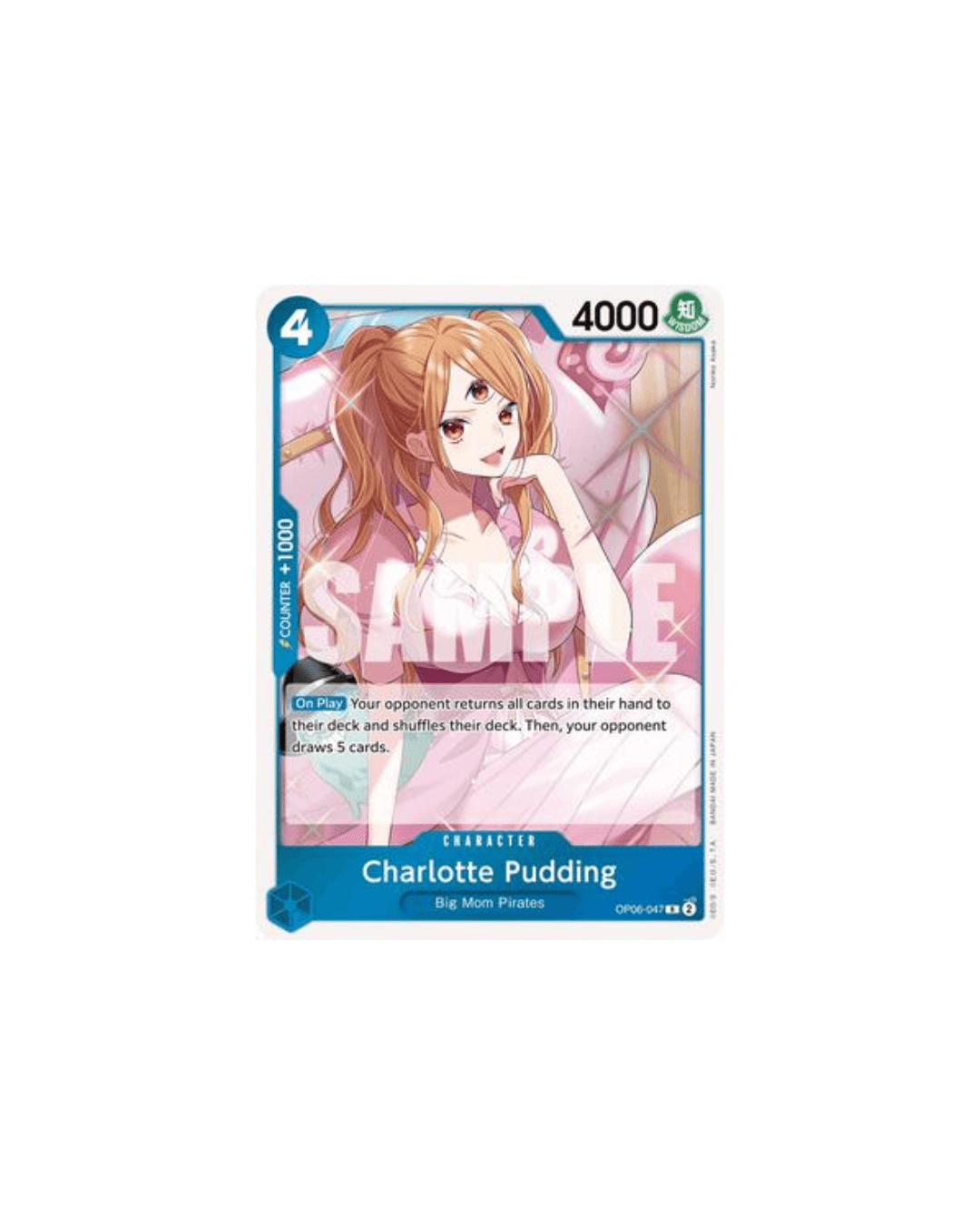
Charlotte Pudding is gone. Bandai announced the ban yesterday, effective April 1. OP06-047. The card that broke board states with Jinbe synergy. The one the community has been yelling about for months. Dead.
Six cards unbanned at the same time. Jinbe OP07-045, Kingdom Come EB01-059, Great Eruption ST06-015, Moby Dick OP02-024, Enies Lobby OP03-098, Ice Age OP02-117. All back in Standard.
And April 1 marks the first-ever block rotation. OP-01 Romance Dawn through OP-04 Kingdoms of Intrigue become illegal in Standard format. Blocks 2 through 5 stay legal. A new Extra Regulation format launches for eternal play. Manga Rare cards get Block X status and stay legal forever.
This is the biggest rules reset in One Piece TCG history.
Why Charlotte Pudding Had to Go
Charlotte Pudding doesn't look broken on paper. It's a board wipe enabler that synergizes with Jinbe leader decks. But in practice, it turned into an endless reset button.
Play Pudding. Wipe the board. Restart the game state. Repeat. Competitive players called it oppressive. The card warped deck building. If you weren't running Pudding or a counter, you were behind.
Bandai didn't explain the ban in detail. They didn't have to. The community already wrote the case. Pudding's board control was too consistent, too repeatable, and too hard to interact with. At high-level play, it wasn't fun to play against. That's the fastest way to get banned.
The timing matters. Removing Pudding now, two weeks before rotation, clears the meta before OP-01 through OP-04 leave Standard. It's a clean reset.
Six Cards Back From the Dead
Jinbe OP07-045 is the biggest unban. The same Jinbe that synergized with Pudding. With Pudding gone, Jinbe is back on the table. Whether it's still competitive without its partner card is the open question.
Kingdom Come EB01-059, Great Eruption ST06-015, Moby Dick OP02-024, Enies Lobby OP03-098, and Ice Age OP02-117 round out the unban list. All cards that were restricted or banned during earlier meta cycles. All getting a second chance in a post-rotation format.
For collectors holding these cards, the value question is immediate. Unbanned cards usually spike on announcement day as players scramble to test new builds. But if the card doesn't perform in the new meta, that spike doesn't hold.
OP11-040 Luffy Gets Leader Restrictions
Luffy OP11-040 can no longer pair with Charlotte Katakuri OP11-067 or Charlotte Linlin OP08-069. Bandai is using restricted pairings as a tuning knob instead of full bans. This keeps the cards legal but kills specific combos.
Restricted pairings are a new tool in the One Piece TCG ban framework. It's a middle ground between banning a card and letting broken synergies run wild. If it works here, expect more restricted pairings in future updates.
The April 1 Rotation
This is the moment that splits the format.
OP-01 Romance Dawn, OP-02 Paramount War, OP-03 Pillars of Strength, and OP-04 Kingdoms of Intrigue become illegal in Standard play. That's the entire first block. Four sets. Hundreds of cards. Gone.
Blocks 2 through 5 stay legal. Extra Regulation format launches for players who want to use the full card pool. Manga Rare cards get permanent Block X status and never rotate out.
For competitive players, this is deck rebuild season. For collectors, it's a pricing reset. Cards that were Standard staples are about to lose tournament demand. Eternal format staples might hold value. Everything else is a question mark.
The rotation framework isn't unique. Magic: The Gathering invented it. Pokemon TCG refined it. But for One Piece TCG, this is year one. How Bandai manages the balance between Standard freshness and eternal format health will define the game's long-term collectibility.
The Meta Right Now
Boa Hancock is the most explosive leader in the format. Dracule Mihawk is arguably the strongest deck overall. Those two are shaping tournament play heading into rotation.
Tournament attendance is climbing. Melbourne pulled 1,000 players on February 14. Düsseldorf hit 1,064 on January 24. The organized play system is scaling faster than most TCGs manage in year four.
The card market reflects it. Luffy cards are up 215% year-over-year. Championship Gold Luffy sold for $315,600 in CGC Pristine 10 in December 2025. OP13 sealed boxes are trading at $700 against a $120 MSRP. That's a 483% markup.
One Piece TCG is the third-largest TCG on the planet behind Pokemon and Magic. It got there in three and a half years. Bandai's card segment hit $1.99 billion in FY2024, up 18.1% year-over-year. Roughly $170 million of that came from One Piece TCG alone.
Simultaneous Global Release Is Coming
The rotation and ban list aren't the only structural changes hitting the game this year. Simultaneous worldwide release starts with OP-16 on June 12. No more Japan-first window. No more English collectors waiting months for product.
That change kills the time-gated scarcity model that's been propping up English premiums. The rotation clears old sets from Standard. The Pudding ban resets the meta. Simultaneous release removes the release delay.
Bandai is rebuilding One Piece TCG from the ground up in the first half of 2026.
The Bottom Line
Charlotte Pudding is banned. Six cards are unbanned. OP-01 through OP-04 rotate out of Standard on April 1. Leader restrictions are now a thing. Extra Regulation launches for eternal play.
If you're playing One Piece TCG competitively, April is deck rebuild month. If you're collecting, it's pricing reset season. If you're watching from the sidelines, this is the moment that shows whether Bandai can manage a long-term TCG format or just ride momentum until the wheels fall off.
The game went from zero to #3 in less than four years. The next four start April 1.