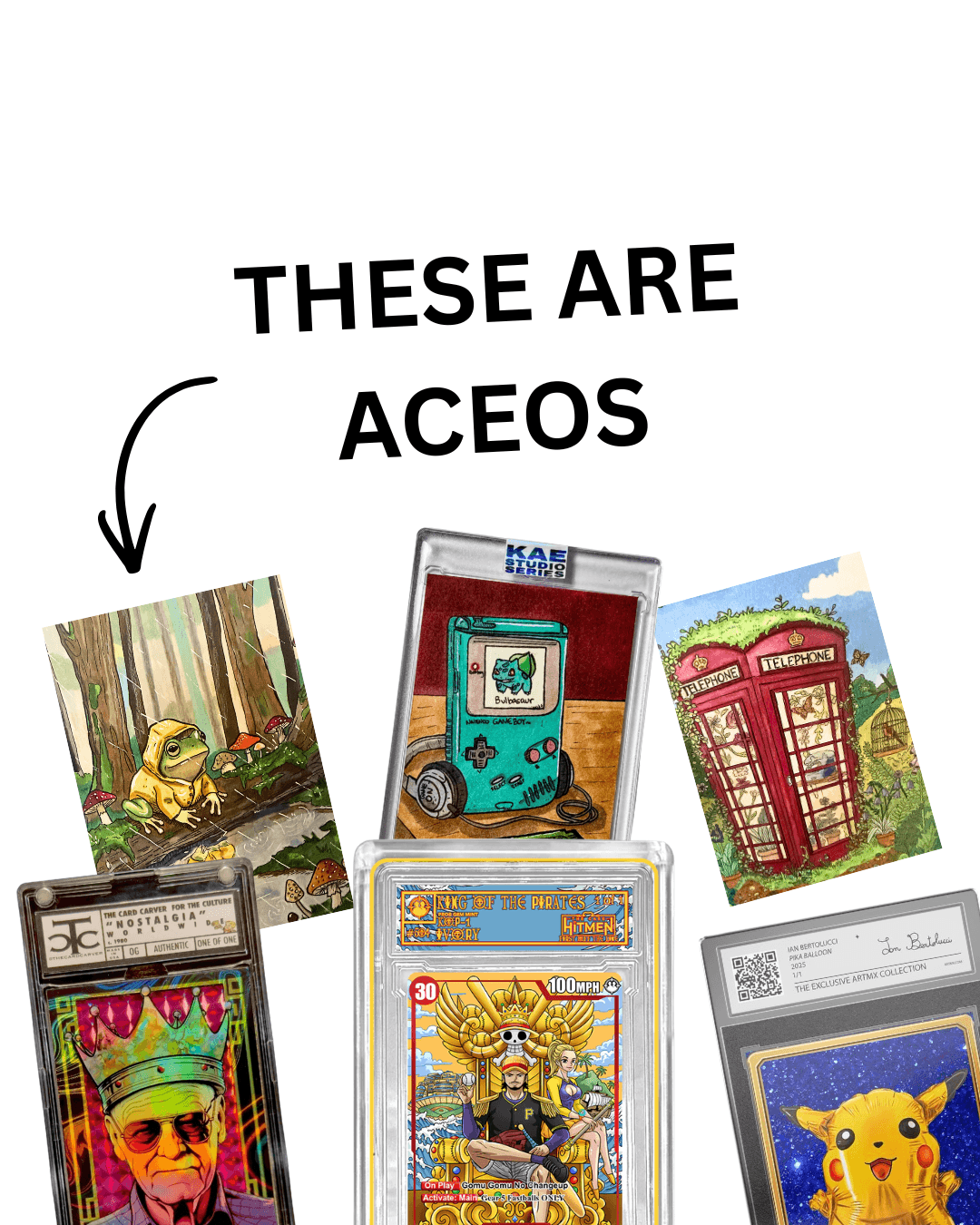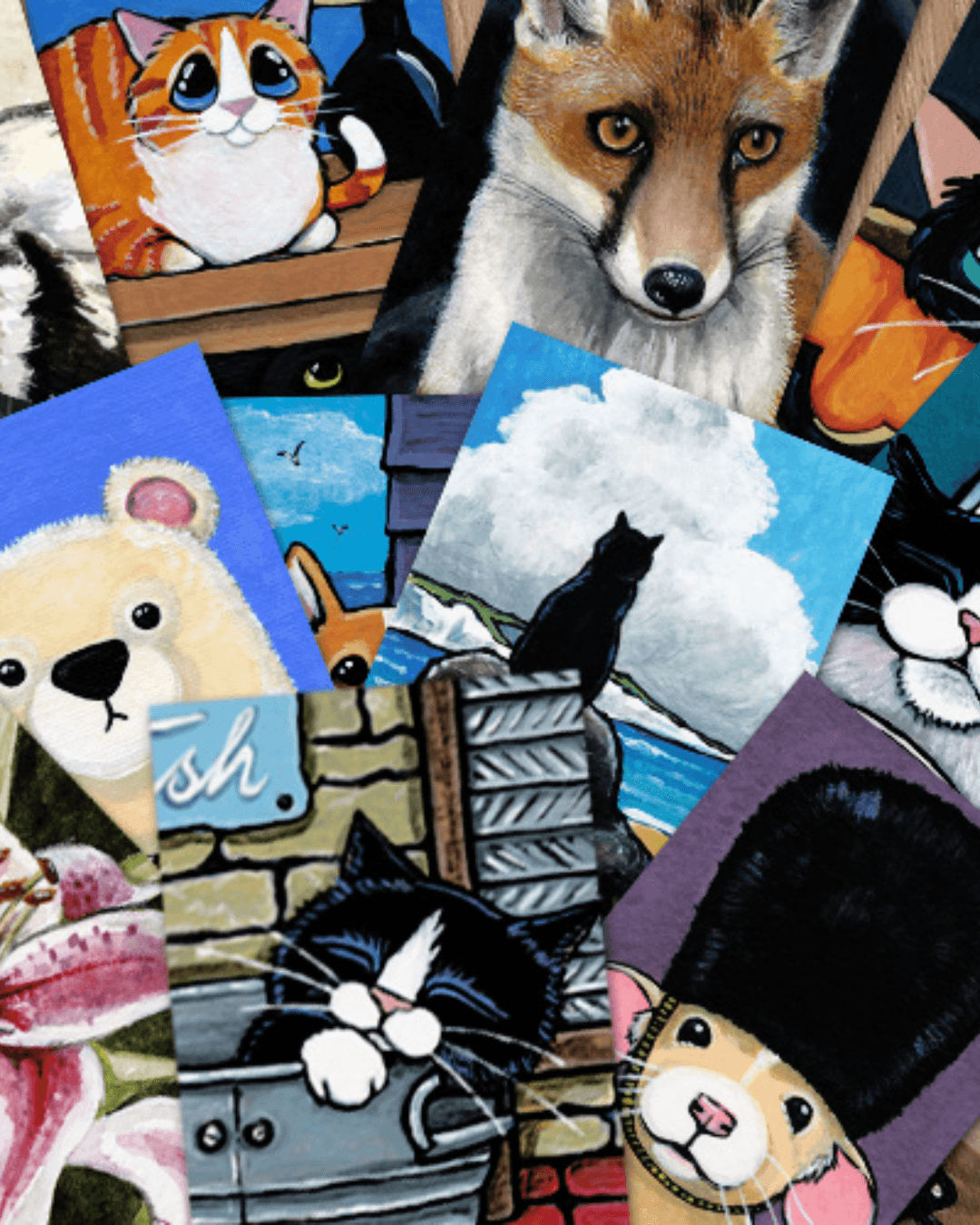
2.5 x 3.5 inches. The exact dimensions of a baseball card, a Pokemon card, a Magic: The Gathering card. But instead of a mass-produced print run, it's an original watercolor. Or an oil painting. Or an ink drawing, a collage, a pencil portrait. One artist, one piece, fits in a penny sleeve.
That's an ACEO. Art Cards, Editions and Originals. Miniature collectible artwork made to trading card specs.
The Basics
Every ACEO measures exactly 2.5 x 3.5 inches (6.4 x 8.9 cm). That's the only hard rule on size. Everything else is open.
The name breaks down into two categories. Editions are limited print runs of an image, typically capped at 9 prints. Each one is numbered (1/9, 2/9, etc).
Originals are one-of-one handmade pieces. No copies. The artist made one, and you're holding it.
Any medium works. Watercolor, acrylic, oil, ink, pencil, charcoal, collage, photography, digital prints, mixed media. Some artists add 3D elements. If it fits the dimensions, it's valid.
Most originals sell between $5 and $30. Top artists command $200 or more per card. Edition prints typically run $2.99 to $4.99.
One of the most affordable ways to collect original art.
How ACEOs Started
The format traces back to 1997. Swiss artist M. Vänçi Stirnemann organized an exhibition of 1,200 small art cards at the INK.art&text gallery in Zurich. All 2.5 x 3.5 inches.
The show ran April through May 1997 and ended with the first trading session. He called them Artist Trading Cards, or ATCs.
The concept crossed the Atlantic that same year. Canadian artist Don Mabie attended the May 31 trading session in Zurich, then organized the first North American ATC session at The New Gallery in Calgary on September 27, 1997.
ATCs had one strict rule. You trade them or gift them. Never sell.
That worked until it didn't. By the early 2000s, artists were making these miniature pieces and buyers wanted to pay for them. The no-selling rule was a wall.
In October 2004, Colorado artist Lisa Luree (known on eBay as "bone*diva") solved the problem. She coined the term ACEO to distinguish sellable art cards from trade-only ATCs. Same format. Same size. But now artists could actually get paid.
In 2006, eBay awarded Luree the Community Hall of Fame Award for her role in building the category on the platform.
The format went international. In Germany, the equivalent is called KaKAO. Kartenkunst, Auflagenfrei, Original. Same concept, different language.
ACEOs vs. ATCs vs. Sketch Cards
Three formats. Same 2.5 x 3.5 size. Different rules.
ATCs are traded or gifted between artists. Never sold. The original format from 1997. Still active in artist communities worldwide. SAFTH (Small Art From The Heart) runs international ATC exhibitions with artists from 30+ countries.
ACEOs are the sellable version. Independent artists make them and sell them directly through marketplaces and at shows. No corporate middleman.
Sketch cards are hand-drawn cards commissioned by companies like Topps and Upper Deck, typically inserted into commercial trading card products or obtained through redemption programs. The earliest mainstream sketch cards were the 1993 SkyBox Simpsons "Art De Bart" cards. Packs contained redemption cards that collectors mailed in to receive an original hand-drawn piece by Matt Groening himself. Only 400 redemption cards existed. One of the sketches sold for $24,375.
Sketch cards are tied to commercial brands and products. ACEOs are independent.
The distinction matters. A sketch card's value is tied to the brand and the product it came from. An ACEO's value is tied to the artist who made it.
Why Some Cards Sell for $200 and Others for $5
Originals are almost always worth more than editions. One-of-one beats a numbered print.
Beyond that, value comes down to the artist's reputation, the medium (hand-painted oil and watercolor tend to command premiums over digital prints), subject matter (fan art of popular franchises, animals, and fantasy themes sell consistently), and detail level relative to the tiny canvas.
The 2.5 x 3.5 format forces economy. Every brushstroke matters at this scale. Collectors notice the difference between an artist who paints at this size versus one who shrinks a larger composition down.
Where to Buy
eBay is where the format was born commercially, and it's still the biggest marketplace. Over 13,000 active listings as of February 2026. Search "ACEO original" and filter by auction or Buy It Now.
Etsy has a strong ACEO presence, particularly for artists selling originals directly from their studios.
Nerdworth (nerdworth.com) is built specifically for ACEO art cards. It's running a Pokemon 30th Anniversary auction right now. 12 pieces from 10 artists, all starting at $1, closing March 6.
DeviantArt still hosts ACEO communities where artists post and sell directly.
How to Start Collecting
Storage is simple. ACEOs are trading card sized, so all standard trading card supplies work.
Penny sleeves for protection. Top loaders for display-quality pieces. 9-pocket binder pages if you want to flip through a collection.
Start with what you like looking at. Not what you think will appreciate. A $100 budget gets you 5-10 original pieces from solid artists, or 3-4 from more established names. That's a real collection on a real budget.
Follow the artists, not the trends. ACEO artists tend to build direct relationships with their collectors. Buy from someone whose work you connect with and you'll get first access to new pieces before they hit open listings.
A Note for Artists
Making ACEOs is straightforward. Pre-cut blank cards are available in bulk online, or cut your own from watercolor paper, cardstock, or illustration board. Standard trading card dimensions. 2.5 x 3.5 inches exactly.
Sign the back. Include your name, the title, the medium, the date, and whether it's an original or edition (with numbering). A certificate of authenticity is optional but adds perceived value, especially for higher-priced originals.
The format is a low-risk way to sell original art. Small canvas means fast production time. Low price points mean lower buyer hesitation. And the trading card format means collectors already know how to store and display what they buy.
Pocket-Sized Original Art
ACEOs have been around for over two decades. The format survived because it solves a real problem. Original art is expensive and hard to collect. A 2.5 x 3.5 inch canvas changes that.
Over 13,000 listings on eBay right now. Artists from 30+ countries. Prices that start under $5. You can build a real collection of original hand-made art for the cost of a nice dinner.
That's the whole pitch. No gatekeeping. No six-figure auction paddles. Just art that fits in a penny sleeve.