Collectors announced a $200 million expansion of PSA on Thursday, May 14. The Athletic broke the story. The plan covers 18 months, double the physical footprint, new logistics tech, and roughly 1,000 hires through the end of 2026.
The same day the investment hit the press, PSA pushed turnaround times longer across every tier and doubled the Value Bulk minimum from 20 cards to 50.
That's the story. The biggest capital injection in PSA's history landed on top of a price-hike announcement. In the middle of a collector boycott. One month after an antitrust lawsuit.
The $200M Plan
PSA calls it three pillars. Infrastructure, technology, expertise.
Infrastructure means doubling the physical grading footprint. PSA already spent over $100M since 2021 building out facilities in New Jersey, Tokyo, Florida, and Texas on top of its Southern California headquarters. The new money extends that buildout.
Technology means proprietary logistics and grading systems. Expertise means hiring. Roughly 370 positions are open right now. Another 700 or so are planned by year-end. PSA President Ryan Hoge described a piece of the spend as funding "Graders University," PSA's internal training program.
Hoge framed the broader push this way: "To maintain the PSA standard at this scale, we have to grow holistically. This expansion impacts the entire life cycle of a collectible, from a larger, more efficient receiving and logistics area to an expanded grading floor that accommodates our growing team."
The Buried Lede
The same day the $200M announcement dropped, PSA quietly pushed through its second service adjustment of 2026.
Value Bulk turnaround stretched from 95 business days to 140-160 business days. That's seven to eight months on the cheapest tier. The Value Bulk minimum doubled from 20 cards to 50 cards, effective May 18. Super Express went from $299 to $349 per card.
Every tier got a turnaround bump. PSA extended existing Collectors Club memberships by three months as compensation. From the company statement: "Now when you place an order, you will have an estimated timeline that aligns closer with reality, not optimism."
Translation. PSA was missing its own posted turnaround windows. The fix wasn't faster grading. The fix was longer windows.
This is PSA's second service change in four months. On February 10, PSA eliminated the $18.99 TCG Bulk tier entirely and raised every tier below Express by $5. Two price actions in the same calendar year.
#NoPSAMay
The investment and the price hike both landed in the middle of a boycott.
#NoPSAMay emerged on collector forums and social in April. The formal boycott started May 1. Collectors agreed to stop submitting to PSA for the month and route everything to CGC, SGC, or other graders.
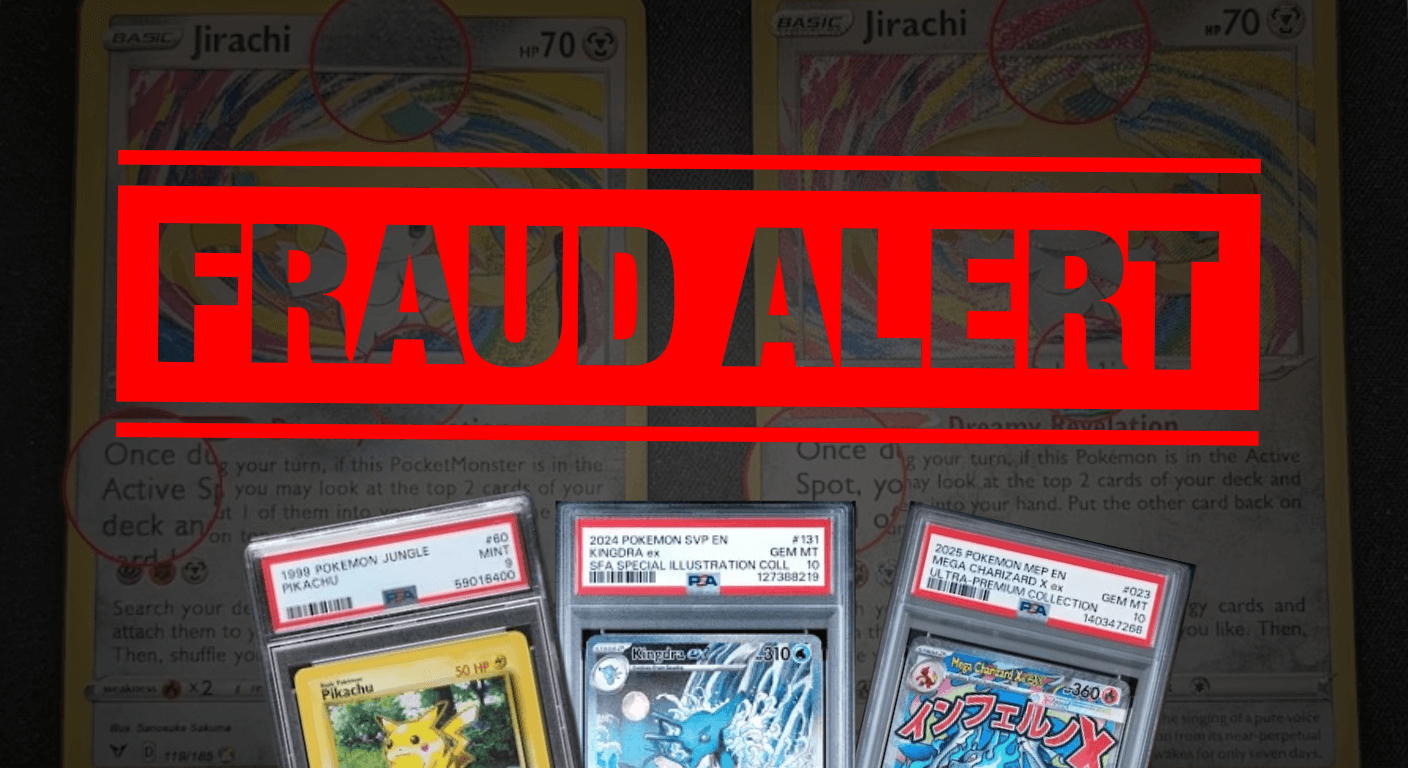
The trigger was the December 2025 buyback scandal. Roughly 30 identical Pokemon cards were submitted to PSA, returned at PSA 9, and the collector accepted a buyback at around $35 per card. Eleven of those cert numbers were later updated to PSA 10 without notification to the original submitter. Congressman Pat Ryan sent the FTC a letter in December asking for an investigation.
On the Sports Cards Nonsense podcast, Hoge said this about submission volume: "We've had our highest submission days in four years. We're not seeing any signs of slowdown on the horizon."
So either the boycott isn't denting volume, or PSA is talking past it. Probably both. Pokemon volume from sets like Prismatic Evolutions has been pulling submission numbers up regardless of the boycott noise.
The Lawsuit Hanging Over the Spend
A month before the $200M announcement, a private antitrust suit hit Collectors Holdings.
Rasmussen v. Collectors Holdings was filed April 14 in the U.S. District Court for the Central District of California. Case number 8:26-cv-00897. Plaintiff's counsel is Daniel J. Mogin and Timothy Z. LaComb of Mogin Law LLP.
The complaint alleges Section 7 Clayton Act and Section 2 Sherman Act violations. The plaintiff seeks treble damages and forced divestment of SGC and Beckett.
Pre-acquisition market shares: PSA at roughly 72%, CGC at 18%, SGC at 5%, BGS at 3%. Post-acquisition, Collectors Holdings controls roughly 80% of the U.S. card grading market through PSA, SGC, and Beckett. SGC was acquired in February 2024. Beckett was acquired in December 2025.
If the divestment claim succeeds, the corporate structure that justifies a $200M consolidation play could be ordered apart. That's a real risk sitting underneath the announcement.
PSA's Own Numbers
PSA claims it has graded more than 8 million cards so far in 2026, a 39% year-over-year jump. Those figures came through the Athletic syndication and are PSA's own. They haven't been independently verified.
For reference, PSA graded 2 million cards in 2020 per Baseball America. It graded 19.26 million in 2025. If the 8 million YTD number holds through year-end pace, 2026 lands at a record.
That's the case PSA is making. Volume is up. Submission days are at four-year highs. The grading pipeline needs more capacity, not less. The $200M solves capacity.
What it doesn't solve is the part collectors are mad about. The buyback scandal. The turnaround misses. The price hikes. The consolidation. Capital expansion is a supply-side answer to a demand-side trust problem.
The Tension
PSA didn't explicitly link the $200M to the boycott or the lawsuit. The company hasn't acknowledged either in its expansion messaging.
But the timing tells a story. Capital is going into PSA right when its retail customers are organizing against it and a federal court is reviewing whether the consolidation that justifies the spend is legal in the first place.
The bet is that volume keeps climbing and trust gets rebuilt with better turnaround times. The risk is that the buyout that built Collectors Holdings into the dominant player is exactly what gets unwound.
Either way, the cheapest way to grade a card through PSA in May 2026 takes seven months and requires 50 cards in the box. That's the part collectors actually feel.