Charizard is the most-counterfeited collectible in the world. Michael Jordan slid to #2.
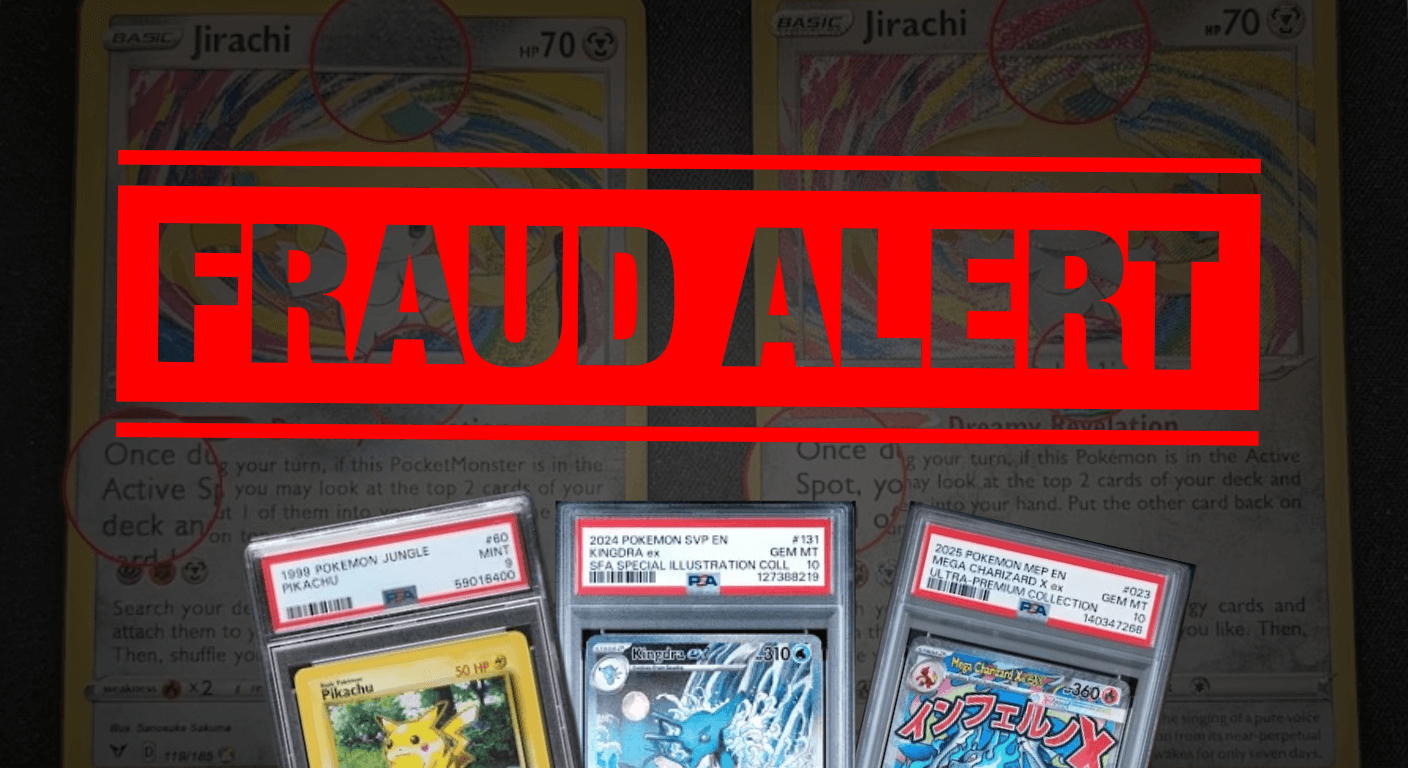
That's the headline buried in PSA's 2025 Fraud Report, dropped May 7. The company's first-ever public fraud disclosure. 32 pages. The fraud center of gravity has officially moved from sports legends to Pokemon.
The $200M Number
PSA intercepted more than $200 million in projected market value of fraudulent collectibles in 2025. Counterfeit volume jumped 45.3% year over year. Counterfeit submissions as a share of total submissions surged 250%.
Ryan Hoge, PSA President, calls the $200M figure conservative. "It was a conservative number. If you looked at it on the extreme end, that number could be well north of a billion dollars."
The split tells the real story. TCG accounted for 56.3% of counterfeits. Sports made up 43.1%. Pop culture was a rounding error at 0.6%. Modern cards (1990 and later) drove 70.1% of counterfeits. Vintage took the other 29.9%.
The Pokemon Takeover
Counterfeit Pokemon TCG submissions jumped 125% year over year. Counterfeit sports cards grew 5.1% in the same window.
Altered cards tell an even uglier story. Altered trading cards rose 108.7% overall. Pokemon accounted for 69.8% of every altered card PSA intercepted in 2025. Altered Pokemon was up 407.2% YoY. Altered sports? 1.6%.
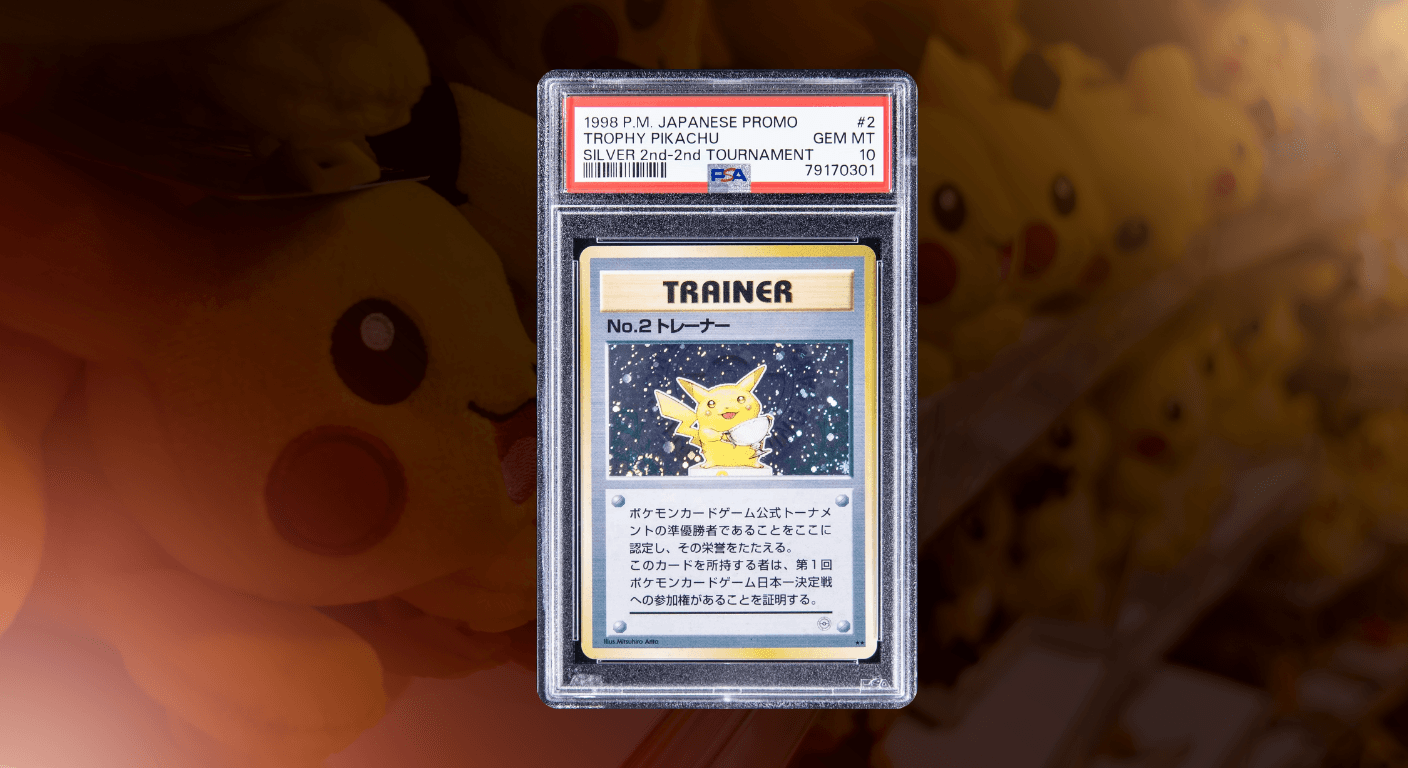
Nine of the ten most-altered subjects are Pokemon characters. Jordan is the only non-Pokemon name on that list, sitting at #3. All ten of the most-altered individual cards are Pokemon. #1 is the 2019 Japanese S-P Pikachu #002, known to collectors as Shibuya's Pikachu.
Hoge's framing on Charizard taking the top counterfeit spot: "Charizard is kind of like Michael Jordan. Everybody knows that character, and they want one."
The Top 10 Counterfeit Subjects
1. Charizard 2. Michael Jordan 3. Pikachu 4. Mickey Mantle 5. Gengar 6. Tom Brady 7. Rayquaza 8. Umbreon 9. Mewtwo 10. Ken Griffey Jr.
Six Pokemon. Four sports legends. Jordan topped the 2024 list per cllct's reporting. One year later he is #2 behind a fire lizard.
Why Mid-Tier Pokemon Cards Get Hit
Matt Hendler, PSA's Head of Grading Brand Protection, gave the cleanest explanation in the report:
"Counterfeiters often take the same approach as someone printing fake currency. They target the $10 or $20 bill instead of the $100."
The fastest-growing counterfeit cards back the framing.
- M Gengar EX #35 (Phantom Forces, 2014): +656% YoY - Lugia EX #134 (Plasma Storm, 2013): +640% YoY - M Rayquaza EX #105 (Roaring Skies, 2015): +520% YoY - Charizard ex #199 (Pokemon 151, 2023): +420% YoY
These are not the $50,000 grails. These are recognizable mid-tier cards with strong name recognition, accessible art files online, and enough resale volume to move fakes without flagging buyers. Print one believable M Gengar and a casual collector pays $200 for it without a second look.
The Vintage Sports Floor Is Still Terrifying
The Pokemon growth is loud. The sports baseline is the quiet horror.
PSA's hit rates on vintage sports submissions in 2025:
- T206 Honus Wagner: 92.3% fake (12 of 13 submissions) - 1952 Topps Mickey Mantle: 61.9% fake (112 of 181) - 1986 Fleer Jordan #57: 25% fake (821 of 3,285) - 1984 Star Jordan #101: 26.7% fake (96 of 360)
Sports counterfeit growth is flat at 5.1% because the floor is already saturated. There is not much room to grow when 9 of every 10 Wagner submissions are fake. Pokemon is where the growth lives now because the Pokemon market is still being mapped by counterfeiters.
Altered Is the Other Half of the Problem
Counterfeit cards are wholly fake. Altered cards are real cards manipulated to grade higher. Trimming. Recoloring. Resurfacing. Gloss added or removed. Edges shaved.
Altered is in some ways worse than counterfeit. The base card is authentic. The signal a collector relies on (the look of a real card under a loupe) is partially real. A trimmed 1999 Base Set Charizard with a recolored back can fool a casual buyer and sometimes a careful one.
The most-altered card in 2025 was the 2019 Shibuya's Pikachu. Real Japanese promo. Manipulated to push borders, edges, and surfaces toward a PSA 10.
Altered Pokemon up 407% YoY says collectors are not just being sold fakes. They are being sold real cards that have been quietly improved.
What PSA Is Doing About It
The report logs the investment side too. 80,000+ hours of specialized grader training in 2025. New graders complete 13,000+ supervised evaluations before grading independently.
PSA's reference library now holds 270M+ card images. A proprietary AI checks every submission against that database. The brand protection team shares intelligence across PSA, Beckett, and SGC, all under the Collectors Holdings umbrella.
Hoge on the limits of the tech stack: "Their expertise on feel and smell of the card is something that a computer and AI cannot replace."
Trust is the framing PSA keeps returning to. From Hoge: "Trust is what allows any market to grow. Protecting that trust is PSA's most important responsibility."
The $200M Mirror
One week after this report dropped, parent company Collectors announced a separate $200 million expansion of PSA. Two different stories. Same dollar figure. Worth noting only because the symmetry is hard to miss.
The Takeaway
If you are buying mid-tier modern Pokemon raw in 2026, the math just got worse. M Gengar EX, Lugia EX, Mega Rayquaza, Charizard 151. Those are the cards counterfeiters are aiming at right now and the growth numbers are not slowing.
Charizard is the new Jordan. That is both an honor and a warning. The honor is brand reach. The warning is that the most-faked collectible in the world tends to also be the riskiest one to buy raw.