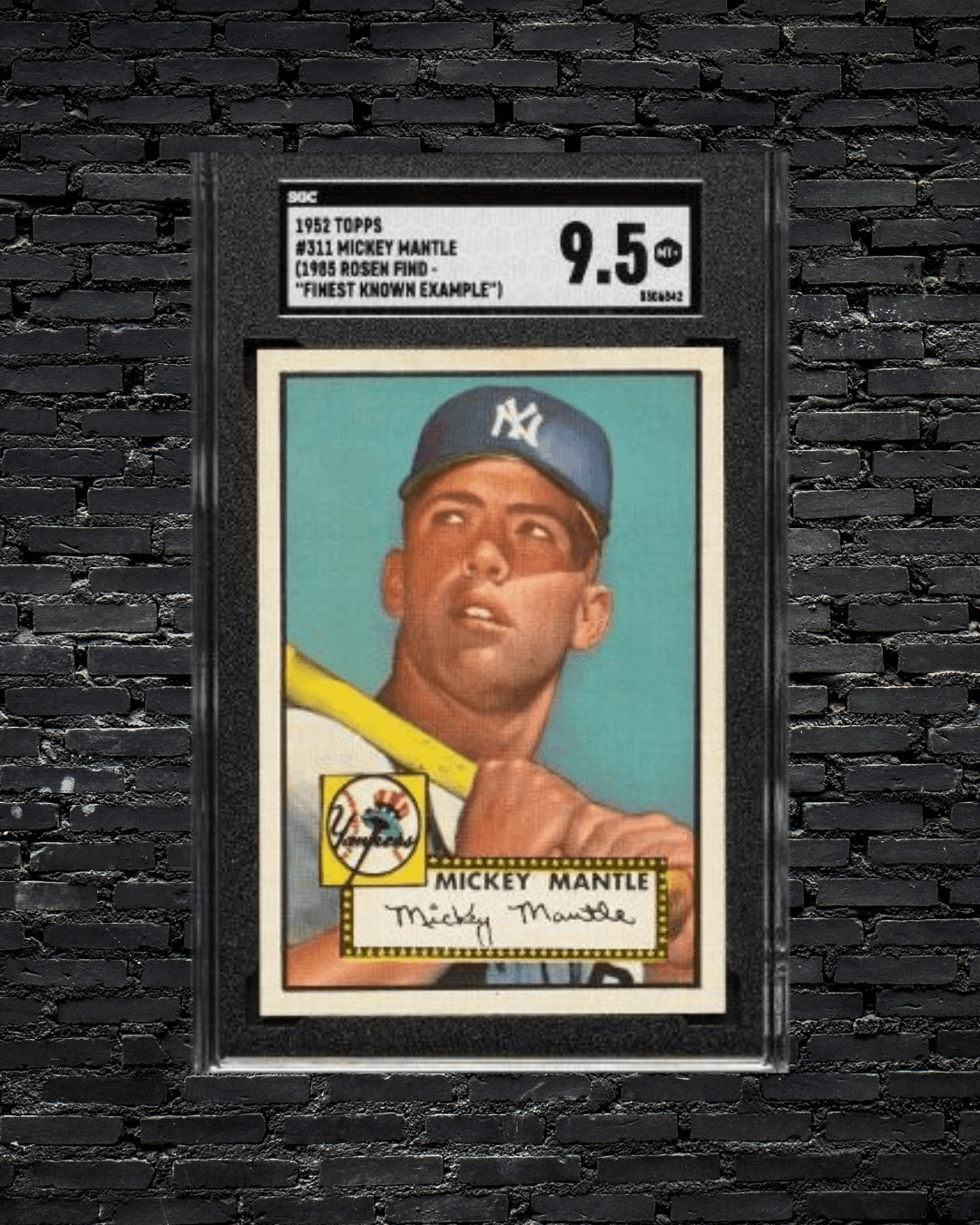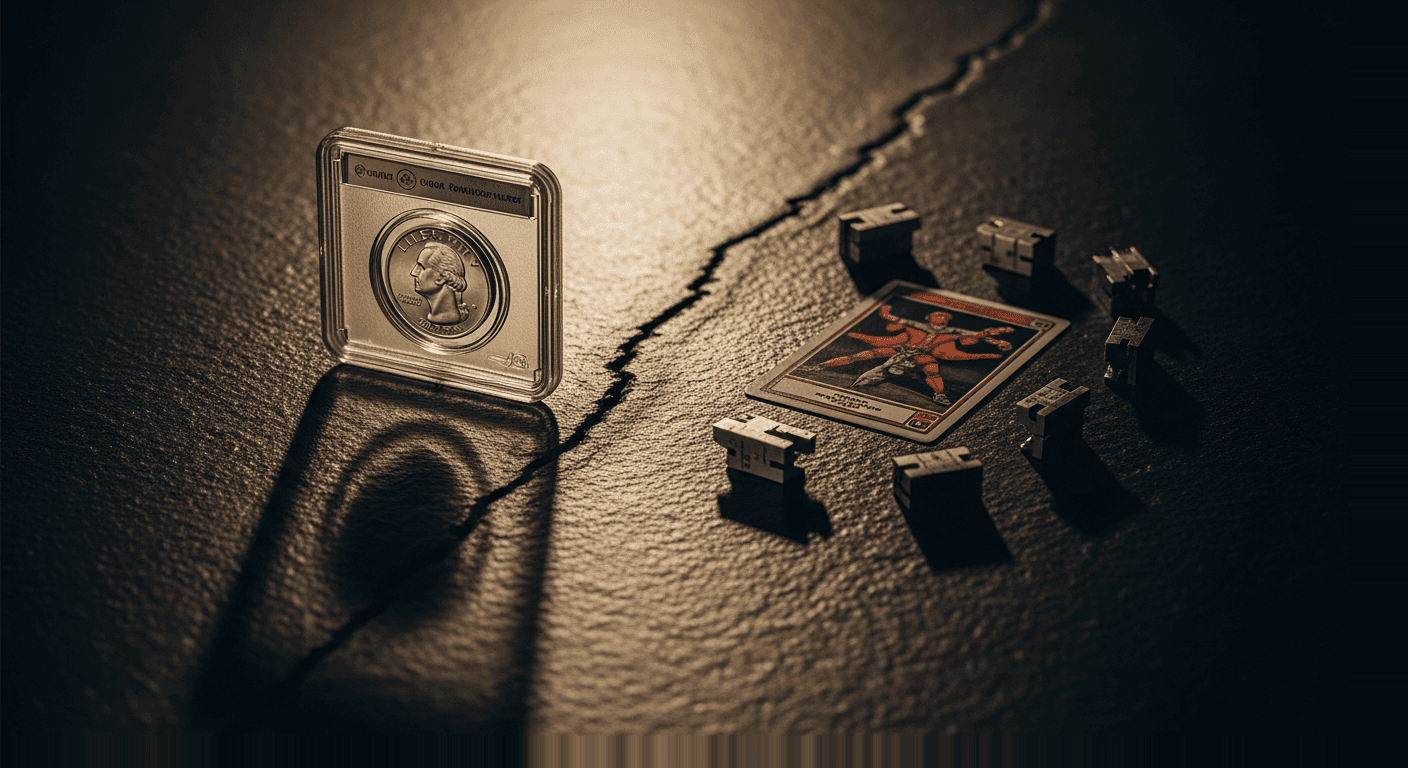
Coins solved this problem in 1949. Cards graded 26.8 million units in 2025 and still can't agree on what a "10" means.
The Sheldon scale gave coins one language. PCGS uses it. NGC uses it. ANACS uses it. MS-65 means the same thing on every slab from every company.
A dealer in New York and a collector in Los Angeles can agree on a grade without seeing the coin.
Cards don't have that. Four major graders. Four different definitions of "10." Four scales that all say "1 to 10" but mean completely different things. And one hobby paying the price for it.
The Sheldon Blueprint
Dr. William Sheldon published the 1-70 coin grading scale in 1949 in his book "Early American Cents, 1793-1814." Originally designed for large cents. The American Numismatic Association adapted it for all U.S. coins in the 1970s and formally adopted it in 1977.
PCGS launched in 1986. Used the Sheldon scale. NGC launched in 1987. Used the Sheldon scale. No debate. No competing frameworks. No fragmentation.
The company verified the grade. But the standard belonged to the hobby. Not to any single business.
That's what standardization looks like. One language. One framework. Universal trust. Cards have none of it.
Cards Have No Standard
PSA uses a 1-10 scale. No half grades above 8.5. A PSA 9.5 does not exist. PSA 10 means "Gem Mint."
BGS uses 1-10 with half grades and four subgrades for centering, corners, edges, and surface. BGS 10 means "Pristine." BGS 9.5 means "Gem Mint." Less than 5% of all cards submitted receive a BGS Black Label 10.
CGC uses 1-10 with two tiers of 10. CGC 10 "Pristine" means flawless under 10x magnification. CGC 10 "Gem Mint" means one criterion fell just below pristine. Same number. Two meanings.
SGC uses 1-10 with half grades and two tiers of 10. SGC 10 "Pristine" gets the gold label. SGC 10 "Gem Mint" sits below it. Both are a 10. SGC 9.5 is "Mint+."
Now read that list again. A PSA 10 is roughly equivalent to a BGS 9.5. Same card. Same condition. Different number depending on who grades it.
A collector sees "10" on a PSA slab and "9.5" on a BGS slab and assumes PSA graded it higher. They didn't. The scales just don't match.
26.8 million cards graded in 2025 across all companies. All on incompatible scales. That's not a grading system. That's every company selling its own version of the truth.
The Grading Graveyard
The card grading industry has a body count.
GAI went bankrupt in 2008. GEM and FGA got banned from eBay after fraud investigations.
In the 1990s and early 2000s, operators with slab machines and no qualifications popped up everywhere. Most vanished within a few years. The market didn't trust them.
The graveyard keeps growing. Collectors Holdings acquired SGC in February 2024. Volume dropped 61% within two months despite promises of independence.
Collectors Holdings announced its acquisition of Beckett in December 2025. CBCS announced its shutdown in March 2026, with submissions ending April 17.
One company now controls PSA, SGC, and Beckett. That's roughly 79-80% of all cards graded in the United States under one corporate umbrella.
The only major independent grader left is CGC. It grew 121% in 2025 and graded 4.92 million cards.
The market isn't consolidating around a standard. It's consolidating around a parent company. Those are very different things.
What Does Grading Actually Add?
Modern pack-fresh cards get pulled from a sealed booster and slabbed the same week. A 2025 Pokemon card from a fresh pack is already in perfect condition. What is grading verifying? That the factory didn't mess up? That the card exists?
Coins earn their grades. A coin from 1890 has been handled for 136 years. The difference between MS-63 and MS-65 is real, visible, and worth thousands. Grading verifies something meaningful.
Cards from a 2025 booster pack haven't been handled at all. Grading a pack-fresh modern card is like grading a brand-new coin still in the mint bag. The grade is almost always going to be high.
The variation is minimal. The process is a formality.
PSA graded 19.26 million cards in 2025. TCG volume alone was up 97%. The vast majority were modern cards.
Not vintage. Not cards with decades of handling. Modern cards that came out of packs weeks or months before submission.
When everything gets graded, the grade means less. It becomes a processing fee for a plastic case.
The Crack-and-Resubmit Problem
Collectors crack slabs and resubmit the same card hoping for a higher grade. This isn't a secret. It's widespread enough that the hobby gave it its own verb. "Cracking."
A card graded PSA 8, worth under $75, was cracked and resubmitted. It received a PSA 10. Value jumped to $375. Same card. Same company. Different result.
Another case. SGC 8. Cracked and sent to PSA. Got a 6. Cracked again. Sent back to SGC. SGC flagged it as "altered/trimmed."
Same card. Three submissions. Three different outcomes. One of them an accusation of tampering.
Nobody has published a large-scale study proving grades are internally consistent across submissions. The crack-and-resubmit culture is the market admitting they aren't. If collectors thought grades were reliable, they wouldn't bother cracking.
If the same company can't grade the same card the same way twice, what exactly are collectors paying for?
The Conflict of Interest
PSA grades cards. PSA publishes the Sports Market Report, its own price guide. Collectors Holdings buys and sells graded inventory.
One company controls the grade, the published value, and the sales channel.
The 2025-2026 grade swap scandal put numbers on the problem. A collector submitted roughly 30 identical modern cards. Most graded PSA 9.
The collector accepted PSA's buyback offers at PSA 9 values. Around $35 each.
After buyback, the same cert numbers were updated to PSA 10. No notification.
PSA acknowledged that a "senior reviewer" upgraded the cards during "internal quality control." They denied fraud.
Follow the sequence. The company graded the cards. Bought them at the lower grade. Upgraded them for resale at the higher value.
That's not independent verification. That's a closed loop.
Congressman Pat Ryan's December 2025 letter to the FTC flagged exactly this. A dominant grader identifying, acquiring, and reintroducing high-value inventory before normal price discovery.
He wasn't speculating. He was describing what already happened.
AI Grading Won't Fix This
AGS built a machine that laser-scans cards at 28 million pixels and spits out a grade in 20 seconds. No human touch. No subjectivity. The pitch is consistency.
Machines don't have bad days. Machines don't play favorites.
The problem is what the machine learned from. AI grading trains on existing grades from existing companies. If the underlying standards are inconsistent, the AI inherits that inconsistency.
An AGS 10 is calibrated against what, exactly? Not an industry standard. There isn't one.
And the physical process still fails. Documented complaints of cards damaged during PSA's grading process. Scuffed corners. Edge crimps. Corner bends.
PSA has sent emails acknowledging cards "incurred damage during our sealing process." Adding robots to that pipeline doesn't fix the pipeline.
Automating a broken system faster doesn't make it less broken. It makes it break at scale.
What Would a Universal Standard Look Like?
Three paths. None of them easy.
First. A shared numerical scale with published, agreed-upon criteria. Like the Sheldon scale for coins, but adapted for cards.
Every grading company uses the same definitions. A "10" means the same thing on every slab.
Companies compete on turnaround, price, and service. Not on what a number means.
Second. An independent oversight body. The ANA standardized coin grading because it existed outside any single grading company. It represented collectors and the hobby.
Cards have no equivalent. No independent organization sets the rules. The companies grade, define the grades, and profit from them simultaneously.
Third. Separate grading from valuation from sales. No company should grade a card, publish its price, and sell it. Those three functions need structural independence.
The FTC investigation, if it happens, could force some of this. Congressman Ryan's letter is on the record. But regulatory action is slow and the hobby moves fast.
The market might solve it first. CGC grew 121% in 2025. If one independent grader gains enough share to challenge Collectors Holdings' dominance, competitive pressure could push toward standardization.
Companies standardize when customers demand it. Customers demand it when there's a real alternative to walk toward.
Decades Late
The coin hobby solved this in the 1940s and formalized it in the 1970s. Cards are the biggest grading market in the world. 26.8 million graded in 2025. 19.26 million through PSA alone.
An $853 million acquisition built the current near-monopoly. The entire system runs on incompatible scales where the same card gets a different number depending on who you send it to.
Collectors deserve to know what a grade means. Independent of who assigned it, who published its value, and who's trying to sell it to them.
The industry needs a universal standard. It's decades overdue.